
Nigeria’s Exit from the FATF Grey List

Nigeria’s Exit from the FATF Grey List

Financial Action Task Force (FATF) is the global standard-setting body created in 1989 by the G7 to fight money laundering, terrorist financing and the financing of proliferation of weapons of mass destruction.

The Task Force researches how criminals and terrorists raise and move illicit funds, promotes international standards (the “FATF Recommendations”) and assesses countries’ implementation of those standards through peer reviews and follow-up.

With more than 200 countries and jurisdictions committed to apply its standards through its global network of regional bodies and partners such as the International Monetary Fund (IMF) and World Bank, the FATF acts as a watchdog: it monitors jurisdictions for strategic deficiencies in AML/CFT frameworks and can list them as “jurisdictions under increased monitoring” (“grey-list”) or “high‐risk jurisdictions” (“black-list”).

The Financial Action Task Force (FATF) formally announced Nigeria’s removal from its list of Jurisdictions under Increased Monitoring (commonly referred to as the “grey list”) during its Plenary session in Paris on October 24, 2025. This decision marks the successful and timely completion of a rigorous two-year reform process initiated after Nigeria’s inclusion on the list in February 2023. This decision means Nigeria is no longer subject to the enhanced scrutiny applied to countries with strategic deficiencies in anti-money-laundering (AML), counter-terrorist-financing (CFT) and proliferation-financing (CPF) regimes.

The FATF’s public statement specifies that Nigeria, along with Burkina Faso, Mozambique and South Africa, completed the required action plan and thus was removed from increased monitoring. Although Nigeria had faced previous FATF listings and monitoring processes in 2013.

Why it matters

Being on the grey list signalled that Nigeria had significant strategic deficiencies in its AML/CFT/CPF framework, weaknesses in regulation, supervision, inter-agency coordination, beneficial-ownership transparency and financial intelligence sharing.

Grey-listing carries practical implications such as increased due diligence by international banks, higher compliance costs, risk of correspondent-bank relationships being curtailed, and dampened investor confidence.

Being removed goes a long way to improve the country’s financial integrity and transaction credibility. This has a positive impact on the country’s ability to increase transactions around cross-border banking, trade finance, remittances and global capital flows.

Possible implications for the Nigerian economy

  • Improved investor confidence: For international investors, viewing Nigeria as a lower-risk jurisdiction from an AML/CFT perspective improves terms of finance.
  • Lower cost / improved access to global finance: Transaction costs (especially in banking, trade finance & remittances) could see a substantial reduction, while access to international capital markets could improve.
  • Boost for fintech and trade sectors: Nigeria’s growing fintech ecosystem and trade flows may benefit from smoother cross-border transactions and improved interoperability with global financial networks.
  • Enhanced macro-policy credibility: The delisting offers a reputational boost for Nigeria’s reform programme (monetary, fiscal and institutional). It may assist in stabilising the currency, attracting diaspora remittances, and reducing capital flight concerns.
  • Foreign Direct Investment (FDI) and Capital Access: The most significant long-term benefit of the delisting is the positive correlation between financial integrity and increase access to foreign capital. The impact extends particularly to institutional investors, such as global pension funds, sovereign wealth funds (SWFs), and large insurers. These entities often operate under strict mandates that explicitly restrict or prohibit investment in jurisdictions designated as high-risk by organizations like the FATF. The removal of the grey list status effectively unlocks access to vast pools of global long-term capital.

Key risks and caveats

Nigeria’s removal from the FATF grey list marks a significant milestone. Sustaining the achievement requires continuous reform and strong institutional enforcement of AML/CFT frameworks, as any policy relapse could quickly reverse the gains. The delisting only tackles one dimension of Nigeria’s risk profile; underlying macroeconomic challenges such as high inflation, foreign exchange instability, fiscal deficits, the large informal sector, and persistent security concerns continue to weigh on investor confidence and growth potential. Moreover, the measurable benefits of the FATF delisting will take some time to discern, as improved access to global finance and restored correspondent banking relationships depend on consistent policy credibility and gradual rebuilding of international trust.

Based on the timelines of similar countries, Nigeria’s next full FATF Mutual Evaluation is anticipated around 2028. The failure to embed current improvements and secure long-term sustainability could lead to an unfavourable assessment during that evaluation, thereby heightening the risk of re-listing and undermining recent progress.

Furthermore, a critical observation from the November 2024 follow-up report (FUR) highlights the existence of several technical gaps despite the overall success in demonstrating effectiveness. Specifically, several recommendations concerning crucial risk areas were still rated as Partially Compliant (PC), including

R. 12 Politically Exposed Persons (PEPs): Vulnerability exists in the framework for adequate monitoring and mitigation of risks associated with domestic and foreign PEPs.

R. 15 (New Technologies): The regulation of emerging financial products, particularly Virtual Asset Service Providers (VASPs) and related new technologies, remains underdeveloped.

R. 22 Designated Non-Financial Businesses and Professions (DNFBPs) Customer Due Diligence (CDD): Continued weaknesses are present in the full implementation and enforcement of Customer Due Diligence (CDD) requirements across the full spectrum of Designated Non-Financial Businesses and Professions.

Recommendations for stakeholders

  • Government / Regulators: The Central Bank of Nigeria (CBN), Economic and Financial Crimes Commission (EFCC), Nigerian Financial Intelligence Unit (NFIU) and Ministry of Finance should continue to strengthen beneficial-ownership registries, financial intelligence sharing, supervision of high-risk sectors (fintech, remittances, cross-border trade), and embed the reforms into institutional systems to ensure sustainability.
  • Banks & Fintech firms should use the improved standing to renegotiate correspondent banking access, expand international partnerships, enhance cross-border remittance/payment services, and scale trade-finance solutions, while maintaining strong AML/CFT compliance.
  • Investors should reassess Nigeria’s country-risk premium in light of the delisting. However, it is expected that investors would continue to evaluate macro-economic and governance risks.

Conclusion

Nigeria’s exit from the FATF grey list is a significant institutional and reputational milestone, signalling that the country has addressed key deficiencies in its AML/CFT framework. While this alone does not equate to total eradication, it is a critical step towards opening up a clearer path for improved access to global finance, stronger cross-border trade, fintech-powered remittances and enhanced investor confidence. The ultimate payoff will depend on sustained reform, improved macroeconomic policies, and regulatory oversight working together to rebuild the trust of the global financial system.

References

  1. FATF, Outcomes FATF Plenary, 22-24 October 2025. FATF
  2. https://www.fatf-gafi.org/en/publications/Mutualevaluations/fur-nigeria-2024.html
  3. FATF, Jurisdictions under Increased Monitoring – 24 October 2025. FATF
  4. “Nigeria’s removal from FATF grey list marks boost for financial credibility – CBN”, Premium Times, 26 October 2025. Premium Times Nigeria
  5. “What Nigeria’s delisting from the FATF Grey List means for the economy”, Daily Trust, 27 October 2025. Daily Trust
  6. “Nigeria’s exit from the FATF grey list: A major boost to President Tinubu’s economic and monetary reforms”, BusinessDay, 26 October 2025. Businessday NG
  7. “South Africa, Nigeria exit global financial crime watch list”, Reuters, 24 October 2025. Reuters
  8. “South Africa and Nigeria removed from money laundering ‘grey list’”, Financial Times, 24 October 2025. Financial Times
What do you think?
Subscribe
Notify of
guest
0 Comments
Newest
Oldest Most Voted
Inline Feedbacks
View all comments
Insights

More Related Articles

Nigeria Economy Review

2025 Economic Review

Economic Growth Performance

  • Nigeria’s economy expanded by 3.98% y/y in Q3 2025, easing from 4.23% in Q2, its strongest growth since Q2 2021, but outperforming the 3.86% growth recorded in Q3 2024.
  • The non-oil sector, which accounted for 96.6% of total output, grew by 3.91% vs Q2: 3.64%, supported by stronger activity in agriculture (3.79%), financial and insurance services (19.63%), trade (1.98%), construction (5.57%), and modest gains across ICT, real estate, and manufacturing.
  • In contrast, the oil sector grew by 5.84% y/y, a sharp slowdown from 20.46% in the previous quarter, reflecting weaker crude output. Oil production averaged 1.64 mbpd in Q3, slightly below Q2’s 1.68 mbpd but above the 1.47 mbpd recorded in Q3 2024.

Source: NBS, BRB Research

Inflation and Monetary Policy
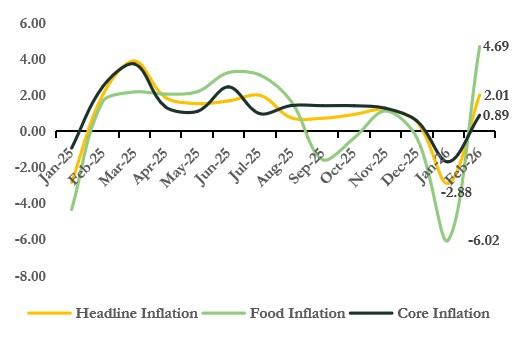
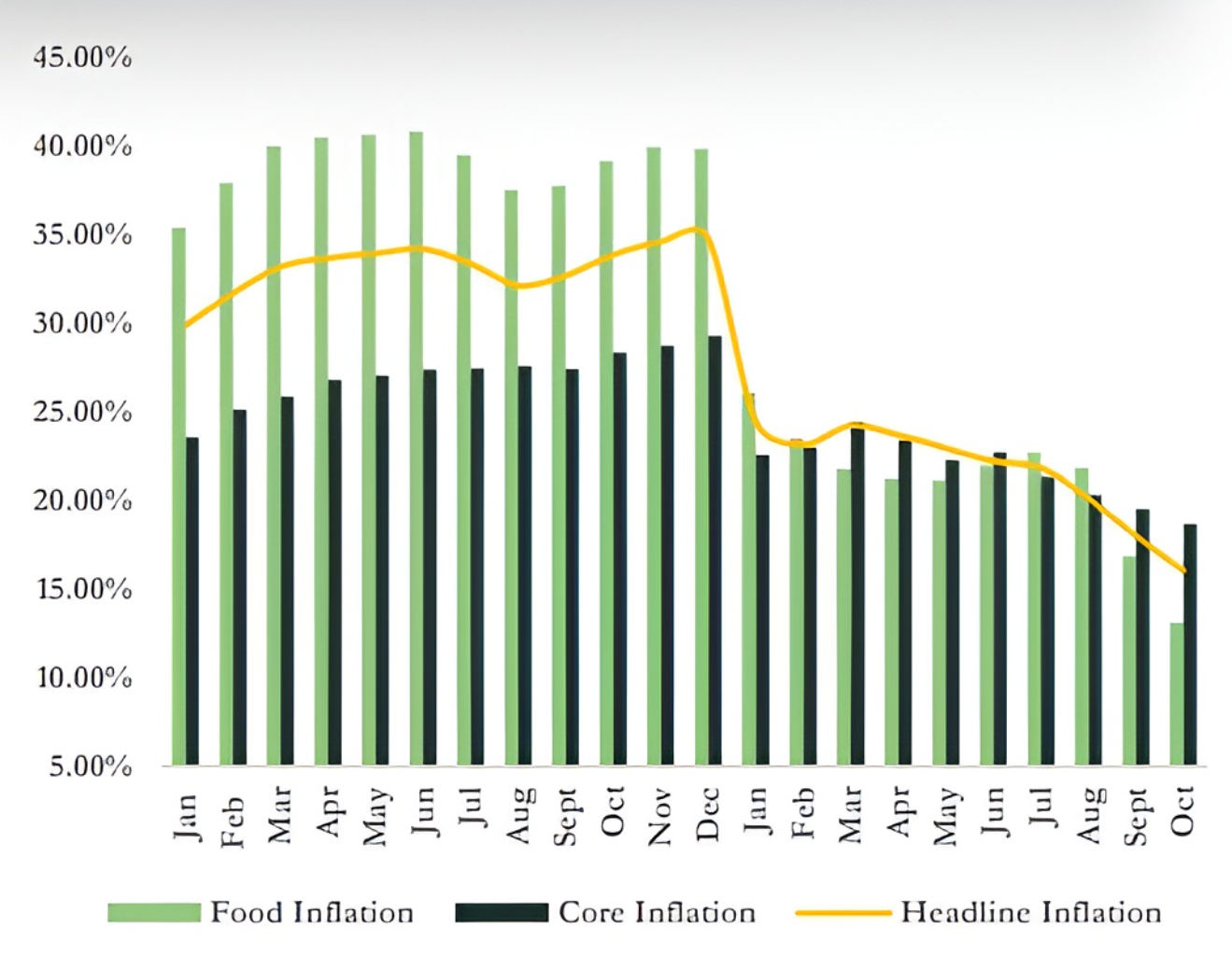
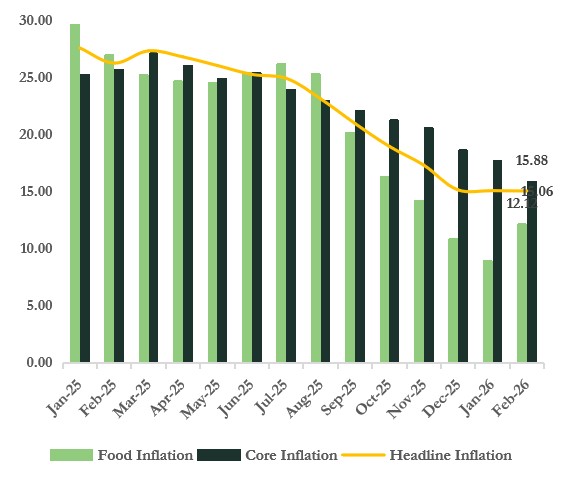
  • Nigeria’s inflation environment has continued to improve, with headline inflation easing for the eighth consecutive month and settling at 14.45% from 16.05% year-on-year in November 2025. The deceleration has been driven largely by the rebasing effect, softer food price pressures, improved supply conditions, and a more stable foreign-exchange market. Core inflation remains elevated at 18.04% while Food inflation moderated to 11.08%, reflecting a gradual easing in underlying price pressures.
  • Against this backdrop, the Central Bank of Nigeria maintained the MPR at 27% in November 2025, following a 50-bps reduction in September, as it sought to consolidate recent progress on disinflation. Although headline inflation continued to moderate, the MPC noted that underlying price pressures remain elevated, warranting a cautious pause. The adjustment of the policy corridor to +50/-450 bps from +250/-250 bps signals a subtly more accommodative liquidity framework. The stance shows a gradual shift from aggressive tightening toward a more balanced macro-stabilization

Source: NBS, BRB Research                                                Source: Investing.com, BRB Research

Exchange Rate and Foreign Reserves
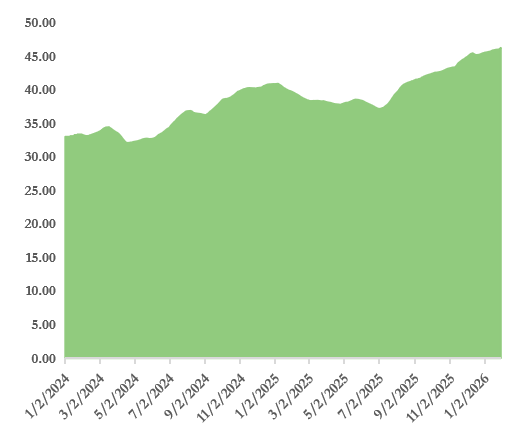
  • Nigeria’s foreign exchange market stabilized in 2025 following previous periods of sharp depreciation, supported by CBN initiatives including the Electronic FX Matching System (EFEMS), transparent auction processes, and partial market liberalization. These measures enhanced liquidity and narrowed the gap between official and parallel market rates, with the naira strengthening to ₦1,446 per US dollar by November 2025 from ₦1,535 per US dollar at the end of 2024. 
  • Foreign reserves rose from USD 40.2 billion at the end of 2024 to USD 44.67 billion by November 2025, reflecting strengthened external sector conditions. The recent Eurobond issuance of $2.35 billion provided a significant boost to reserve buffers, complementing gains from improved oil production, firmer export receipts, steady remittance inflows, and renewed foreign portfolio investment.
Oil Market
  • The 2025 oil market began the year in relative balance, with temporary supply disruptions from seasonal factors and unplanned non-OPEC+ outages offset by robust structural supply. Demand growth remained moderate amid macroeconomic uncertainty, resulting in stable prices with limited volatility. 
  • In Q2, OPEC+ began rolling back voluntary production cuts while output from the U.S. and Brazil remained strong, leading to rising supply that outpaced demand and triggered bearish sentiment. By Q3, oversupply became the defining feature, as global production exceeded demand, inventories accumulated, and analysts revised downward full-year price expectations.
  • The year closed with the supply glut persisting into Q4; inventories remained elevated, and prices stabilized below mid-year peaks following OPEC+ guidance on potential early-2026 output pauses.
Oil Production
  • In Q3 2025, Nigeria’s average daily oil production stood at 1.64 million barrels, up 0.17 mbpd from Q3 2024 but slightly below Q2 2025’s 1.68 mbpd. The sector’s gradual recovery in 2025 was supported by improved security, enhanced pipeline integrity, and more coordinated upstream operations. Production averaged 1.66 mbpd in H1, peaked at 1.68 mbpd in Q2, the highest since 2020, and moderated slightly in Q3, reflecting ongoing operational adjustments and maintenance activities. 
  • The rebound helped reinforce external balances and foreign-exchange supply, but output volatility remained a feature of the sector’s performance. Despite the improvement, production levels fell short of the government’s 2025 target of 2.06 million barrels per day, reflecting ongoing structural challenges. Crude theft, infrastructure constraints, and intermittent operational disruptions continued to weigh on capacity utilization, limiting the pace of recovery.

Source: NBS, BRB Research 

Economic Outlook for year 2026

2026 Outlook
  • Nigeria’s economy is expected to expand over the near term, with the IMF projecting GDP growth of 3.9% in 2025 and 4.2% in 2026, supported by stable oil inflows, improving oil production levels, and greater policy consistency. 
  • Headline inflation is expected to continue its moderating trend in 2026, easing toward 11.56% by year-end, supported by a stable exchange rate, cautious monetary policy, and weaker energy prices. This disinflationary environment is likely to provide the Central Bank of Nigeria with scope to maintain a neutral to mildly accommodative monetary policy stance. We anticipate a potential recalibration of the MPR, with a projected easing of around 200 basis points by mid-2026, contingent on inflation remaining firmly anchored and underlying price pressures remaining subdued.
  • Several risks could reverse the projected downward trend in inflation in 2026. Pressure on the exchange rate may increase the cost of imported goods, while elevated government spending ahead of elections could inject additional liquidity, boosting prices. Structural challenges, including insecurity in key food-producing regions, may constrain supply and exert upward pressure on food prices. External shocks, such as volatility in global oil markets, also represent a potential upside risk to inflation during the year. 
  • Despite these challenges, higher foreign reserve buffers and reforms in the foreign-exchange market, including enhanced transparency and more efficient EFEMS operations,  should help limit exchange-rate volatility and strengthen overall broader macroeconomic stability. These developments, alongside easing inflation and relatively stable macro fundamentals, are likely to support investor sentiment and attract modest portfolio inflows over the course of the year.
  • The macroeconomic environment nonetheless remains sensitive to external and domestic shocks. Oil-price volatility continues to pose the most significant risk to fiscal stability and FX supply, while uncertainty around the revised Capital Gains Tax framework and lingering security concerns may temper investor appetite in the near term. Even so, the broader environment suggests cautiously improving conditions for Nigeria’s asset management and investment industry in 2026.
  • Global oil market dynamics will be pivotal for Nigeria in 2026, with a structural supply surplus expected to persist due to strong non-OPEC+ production from the U.S. and Brazil and a measured supply approach from OPEC+. Demand growth will remain concentrated in non-OECD Asia, while elevated inventories are likely to keep Brent crude in the mid-to-low $50s per barrel. A potential peace deal between Russia and Ukraine could further soften prices if sanctions on Russian oil are eased, adding additional barrels to the market. Although geopolitical disruptions could still trigger short-term volatility, sustained low prices may eventually dampen non-OPEC+ investment. 

Equities Market Review

Nigeria Equities Market Performance 2025

The Nigerian equity market delivered a powerful yet volatile performance in 2025, emerging as one of the strongest markets globally. For most of the year, sentiment was supported by market-friendly reforms, resilient corporate earnings, improved foreign-exchange conditions and strong domestic liquidity.

Market capitalization rose from ₦62.76 trillion at end-2024 to ₦91.29 trillion by late November, reflecting a 45.45% increase in investor wealth. Gains strengthened through the third quarter, with the ASI up 16.57% by mid-year and nearly 50% by October. The NGX All-Share Index (ASI) also advanced significantly, climbing from 102,926.40 points to over 150,000 points in October before moderating to 143,520.52 in November.

Investor participation was robust, driven by both domestic and foreign flows. Total transactions for the first eight months of the year rose by 99% to ₦6.92 trillion. Foreign portfolio inflows increased by 122% to ₦1.45 trillion, aided by improved FX liquidity and clearer exit conditions, whereas domestic investors contributed over ₦5.46 trillion, reinforcing their leadership in market activity. These flows were complemented by the performance of several high-growth stocks, with tickers like BetaGlass, MTN, Ellah Lakes, WEMA Bank, NCR, MBENEFIT, UACN, and ASO Savings delivering returns ranging between 100% and more than 500%, reflecting strong liquidity and high conviction in select counters.

NGX ASI Monthly Returns

Sector performance highlighted the breadth of the rally. Consumer goods companies led with over 100% year-to-date gains by October, supported by strong local production and pricing resilience amid FX constraints. The Insurance Index rose sharply on recapitalization expectations, while the Banking Index, though third in returns, remained the most actively traded, reflecting strong institutional interest. Industrial goods stocks also saw significant demand, whereas the Oil & Gas Index lagged for most of the year due to sector-specific challenges.

NGX Sectoral Performance (2023-2025)

However, the positive momentum was interrupted in November by the sharpest correction of the year. Market capitalization fell by about ₦6.54 trillion following uncertainty over the proposed changes to the Capital Gains Tax framework. The shift from a flat 10% rate to a progressive structure of up to 30% triggered aggressive profit-taking and capital repatriation by foreign investors. Combined with geopolitical concerns, the policy announcement dampened sentiment and illustrated how quickly fiscal decisions can offset months of progress driven by monetary reforms and FX stability.

2026 Outlook

Outlook

Building on a robust 2025, Nigeria’s equities market is poised for a strong 2026 performance, with potential total returns exceeding 30%, supported by ongoing reforms, macroeconomic stability, and stronger corporate earnings. Key growth drivers include continued sectoral diversification, with consumer goods, industrials, and financials expected to anchor performance, alongside rising dividends that enhance total shareholder returns.

Market sentiment will be increasingly shaped by company-specific fundamentals, with investors focusing on earnings quality, balance sheet strength, and cash-flow resilience. The anticipated listing of NNPC Limited and Dangote Refinery next year could serve as a major liquidity and valuation catalyst, attracting both domestic and foreign capital.

Further support is expected from positive macroeconomic factors, including easing inflation, stable interest rates, and an improved foreign-exchange environment, as well as regulatory clarity that strengthens investor confidence. Active portfolio management, diversification across high-quality sectors, and close monitoring of earnings, FX developments, and policy changes will remain essential to navigate potential volatility and capture upside opportunities.

November 2025 Inflation Report

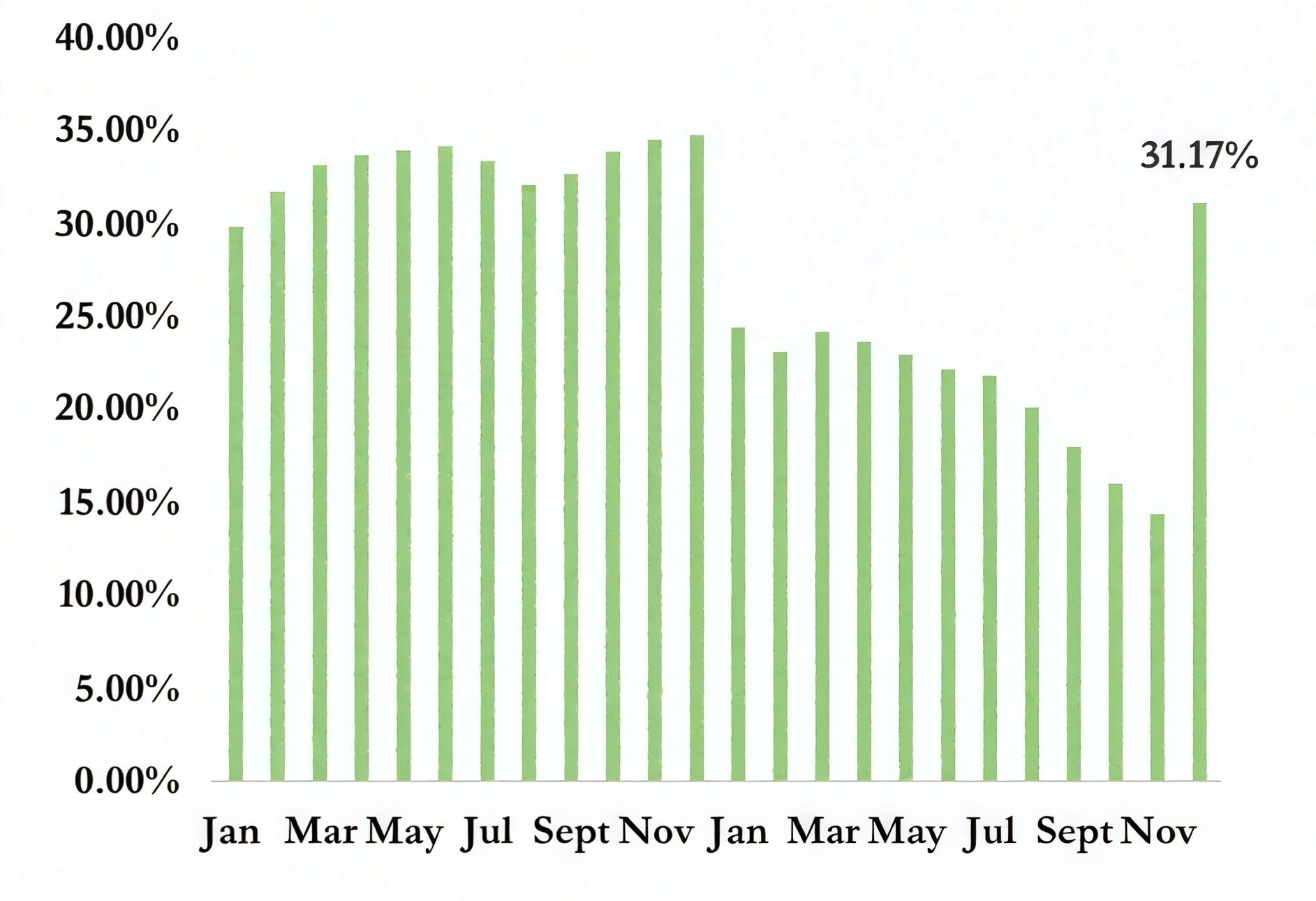
Inflation eased to 14.45% in November

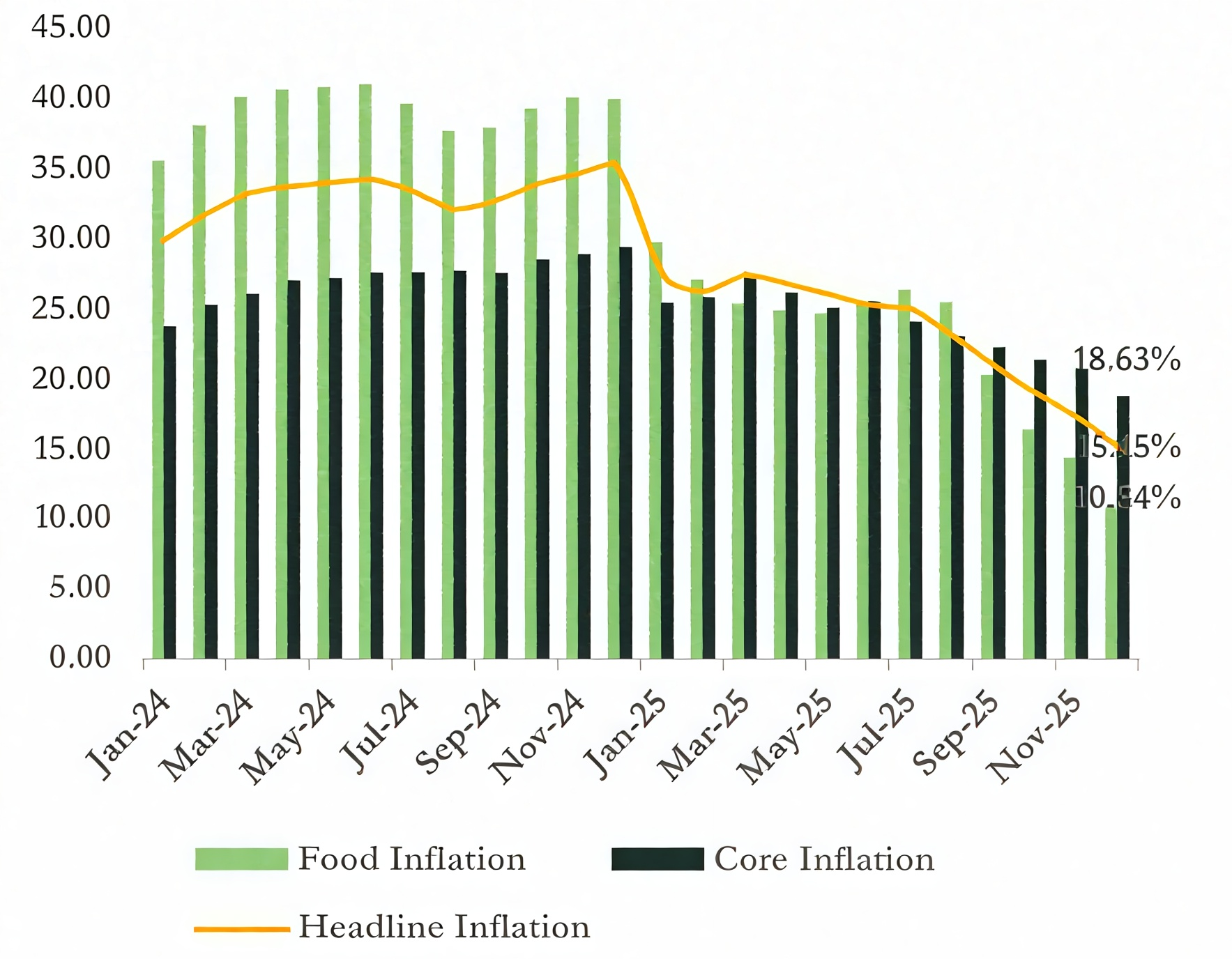
Nigeria’s headline inflation rate eased to 14.45% year-on year in November 2025, down from 16.05% in October, marking the eighth consecutive month of disinflation and coming in below the Federal Government’s 2025 inflation target of 15.75%. The moderation was driven by a slowdown in both major components of inflation. Food inflation declined to 11.08% from 13.12%, while core inflation eased to 18.04% from 18.69%, reflecting softer price pressures across key non-food categories.

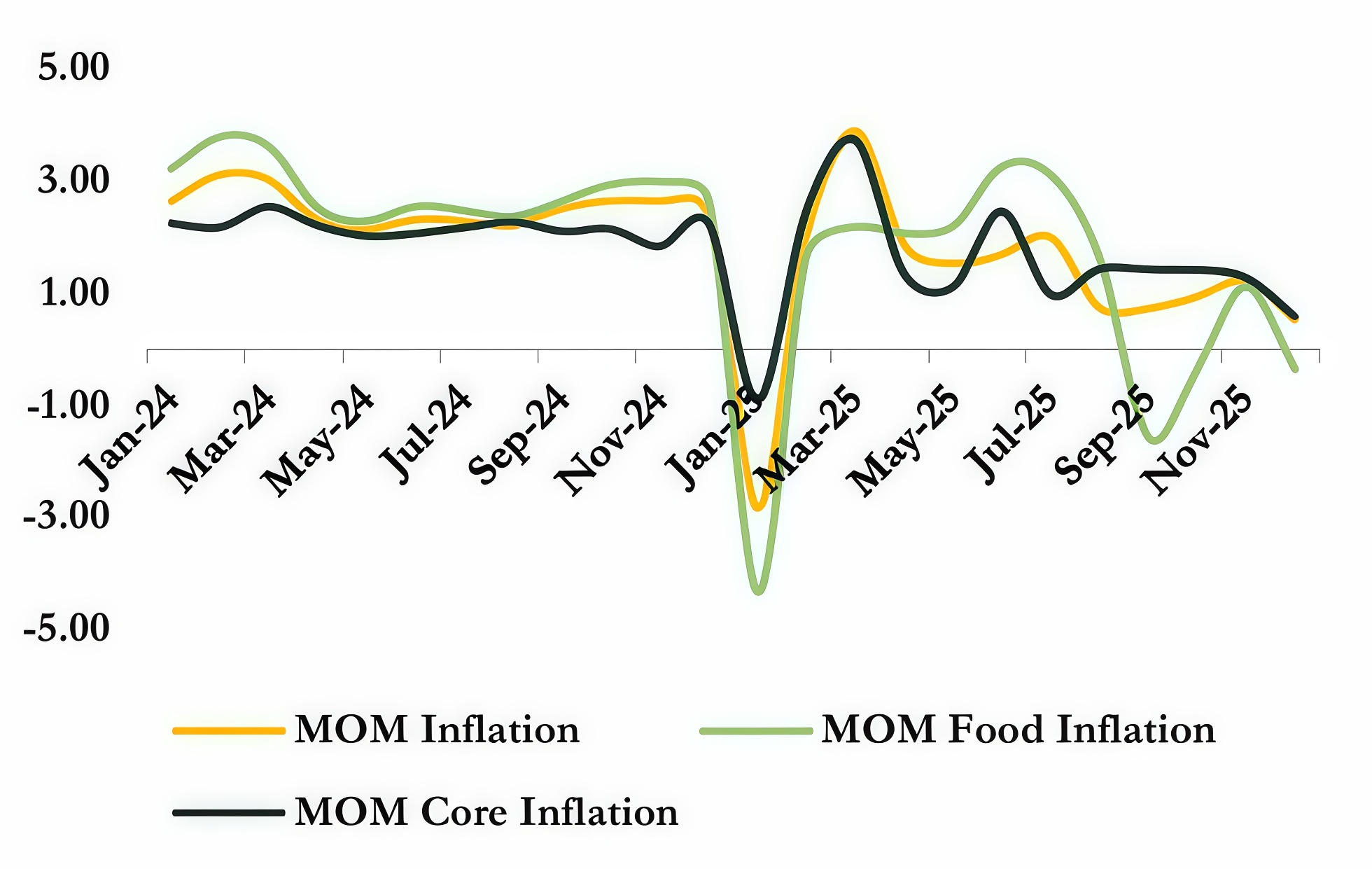
However, price pressures persisted on a month-on-month basis, with headline inflation rising to 1.22%, compared with 0.93% in October, indicating continued increases in price levels. The acceleration was largely food-driven, as food inflation rebounded to 1.13% from -0.37%, reversing the disinflation observed in the previous two months. This reflects renewed pressure from seasonal demand ahead of the festive period, alongside security-related disruptions in key food-producing regions that have constrained harvest activities.

In contrast, core inflation moderated to 1.28% from 1.42%, supported by slower price increases in financial services (0.18% vs 1.71%), education (0.02% vs 0.78%), and information and communication (0.12% vs 0.54%).

OUTLOOK

Looking ahead to November, we expect headline inflation to tick up in December 2025, driven by festive-related demand pressures and food supply constraints, with the increase amplified by base effects following the CPI rebasing. 

Beyond this temporary rise, we anticipate the disinflation trend to resume from early 2026, potentially creating room for the Monetary Policy Committee to begin a gradual pivot
away from its current hawkish stance.

Y-o-Y Inflation Trend
M-O-M Inflation Trend

Monthly Market Brief (November 2025)

MACROS

In November 2025, the Central Bank of Nigeria (CBN) maintained a restrictive monetary policy stance, signaling a measured approach toward sustaining price stability and anchoring market expectations. At the 303rd Monetary Policy Committee meeting, the CBN held the Monetary Policy Rate at 27.0% and retained the Cash Reserve Requirement for deposit money banks at 45%, reflecting its commitment to liquidity sterilization and broader disinflationary objectives. The Standing Facility corridor was adjusted to +50/-450 basis points, a technical refinement designed to improve short-term liquidity management and tighten the transmission of policy signals to the money market. 

The retention of the MPR followed the first-rate adjustment since September, demonstrating the MPC’s preference for caution. Policymakers emphasized that the cumulative effects of previous tightening cycles are still unfolding, and premature easing could undermine gains in inflation control and destabilize the foreign exchange market by weakening the yield differential that attracts portfolio inflows. This approach reflects the dual mandate of controlling inflation while preserving external sector stability.

October CPI data indicated continued disinflation, with headline inflation moderating to 16.05% year-on-year and month-on-month price growth slowing to 0.90%. However, underlying structural pressures persist. Core inflation, which excludes volatile food and energy components, remained elevated at 18.70%, driven by sustained cost pressures in housing, utilities, and transportation. Food inflation, at 13.12%, reflects the vulnerability of the agricultural sector to security challenges, including banditry and logistics disruptions, which continue to exert upward pressure on prices despite monetary tightening.

Inflation Trajectory

In November 2025, the Nigerian foreign exchange market continued to consolidate stability, reflecting the effectiveness of the CBN’s unification and market-driven reforms. The Naira traded steadily around the mid-₦1,440/US$ range, posting a monthly depreciation of -1.34%. The elimination of the chronic arbitrage
premium underscores the success of structural reforms, enhancing investor confidence and supporting efficient market functioning. 

The currency’s resilience was underpinned by a combination of restrictive monetary policy, robust foreign portfolio inflows, and structural measures to expand non-oil FX supply, including the NRBVN platform to facilitate diaspora remittances. High interest rates remain a key tool in attracting capital, though they create a structural reliance on foreign inflows for stability. 

Nigeria’s external sector strengthened markedly, with Gross External Reserves rising to US$46.7 billion by mid-November, equivalent to 10.3 months of import cover. The successful US$2.35 billion Eurobond issuance contributed to reserve accumulation, reinforcing Nigeria’s capacity to absorb external shocks and  maintain macroeconomic stability

EQUITIES

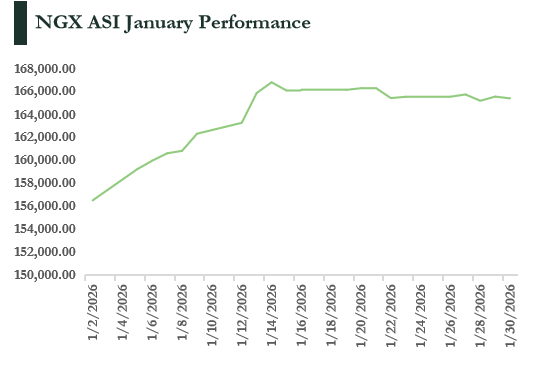
The Nigerian equity market in November 2025 experienced a sharp correction as fiscal policy uncertainty and restrictive monetary conditions combined to trigger widespread profit-taking and capital flight. The NGX All-Share Index dropped from 154,126.46 points at the end of October to 143,520.53 points by 28 November, reflecting a month-to-date decline of 6.88%. Similarly, market capitalization shrank by ₦6.54 trillion, declining from ₦97.83 trillion to ₦91.29 trillion. Despite the pullback, the year-to-date gain remained positive at 39.44%, still lower than the 49.74% recorded at the end of the previous month, reflecting the strong rally seen earlier in 2025. 

The market downturn was primarily driven by profit-taking activities and the government’s announcement of an increase in the capital gains tax for foreign investors from 10% to 30% on non-reinvested equity sales, effective January 2026, which prompted foreign portfolio investors to realize gains under the existing lower tax regime. Concurrently, the Central Bank of Nigeria maintained a rigid monetary tightening stance, keeping the Monetary Policy Rate at 27.0%, further discouraging equity speculation and sustaining pressure on valuation multiples.

NGX ASI Monthly Returns

Sectoral performance across the Nigerian Exchange in November 2025 reflected a broad-based market retreat driven by sharp foreign portfolio outflows and sustained monetary tightening. The Industrial Goods Index recorded the steepest decline at –13.81% (vs. +17.50% in October), as major cement names, DANGCEM (–19.00%), BUACEM (–11.11%), and WAPCO (–4.29%), faced heavy selloffs following the announcement of the 30% capital gains tax on nonreinvested foreign equity sales. Earlier valuation gains, boosted by FX-driven earnings expansion, unwound quickly under higher discount-rate conditions.

The Banking Index fell –5.77% (vs. –3.15%), pressured by broad profit-taking and portfolio repositioning. Tier-1 names such as ACCESSCORP (–14.11%), GTCO (–12.28%), UBA (–8.99%), Zenith (–4.76%), and WEMA (–10.51%) declined as elevated liquidity constraints, particularly the 45% CRR, kept funding conditions tight. Although strong earnings fundamentals encouraged intermittent bargain hunting, they were insufficient to offset overall downside momentum.

NGX ASI Historical Performance

Consumer Goods slipped –3.20% (vs. +4.85%), reflecting a relatively defensive pullback. Losses in Champion          (–17.33%), Nestle (–7.05%), Cadbury (–7.43%), and DangSugar (–7.60%) weighed on the index, though domestic-focused midcaps such as Unilever showed resilience and helped drive a mild late- month rebound, including a 0.57% uptick on November 28. 

The Oil & Gas Index contracted –7.33% (vs. +15.45%), driven by profit-taking in ARADEL (–11.76%) and OANDO   (–19.15%) amid weaker sentiment toward energy names due to global crude uncertainty and domestic macro risks. Insurance posted one of the sharpest declines at –12.06% (vs.+3.37%), as risk aversion triggered broad sell pressure across small- and mid-cap counters. AIICO (-15.35%), NEM (14.74%), and MBENEFIT (- 13.95%) were the major drivers of the loss. 

Overall, November’s performance was dominated by aggressive divestment linked to fiscal policy signals, particularly the CGT announcement, overshadowing sectorspecific fundamentals. While select rebounds emerged toward the month-end, sectoral dynamics remained shaped by tight monetary conditions, fragile investor sentiment, and a pronounced rotation away from high-beta Nigerian equities.

NGX Sectoral Returns in November

In line with this broad weakness, several blue-chip counters were also among the worst-performing stocks for the month, reflecting the heavy divestment pressure triggered by the CGT announcement.
High-beta, foreign-held names such as DANGCEM (–19.00%), ACCESSCORP (–14.11%), GTCO (–12.28%), UBA (–8.99%), Zenith Bank (–4.76%), and NESTLE (–7.05%) saw sharp declines as investors exited large-cap positions to rebalance risk. 

Nonetheless, a few tickers bucked the trend, with NCR (+241.56%), Ikeja Hotel (+60.90%), Eunisell (+37.29%), and UACN (+18.65%) emerging as notable outperformers, largely driven by companyspecific developments and their previously low-price levels, rather than the overall market trend.

Outlook

Market sentiment entering December is expected to remain cautious, despite the federal government’s clarification of the 30% CGT, which introduced key provisions such as grandfathering for pre-2026 gains, exemptions for retail portfolios below ₦150 million, and reinvestment relief. This will ease investor anxiety and create room for cautious re-entry, though liquidity remains tight and macroeconomic conditions continue to limit risk-taking. The rollout of the CBN’s new fixed-income trading and settlement framework will also be closely watched, as any operational disruptions could affect secondary-market liquidity and influence portfolio positioning. 

Despite these headwinds, December may still benefit from seasonal drivers such as dividend positioning, year-end rebalancing, and selective bargain-hunting following November’s valuation reset. However, sustained recovery will depend on consistent policy execution, improved communication, and early signs of monetary easing. Until these conditions improve, overall market posture is likely to remain defensive, with investors prioritizing stability while gradually rebuilding exposure ahead of the 2026 trading year.

FIXED INCOME

Domestic Money Market and System Liquidity

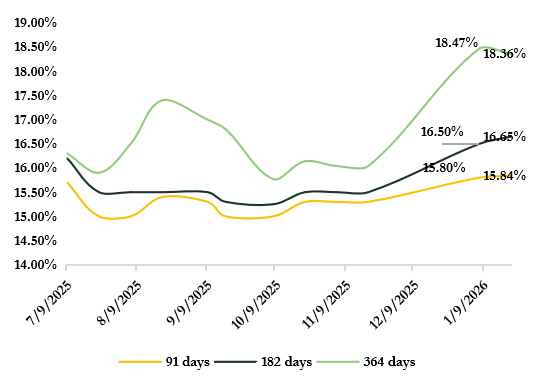
The Nigerian Treasury Bills (NTB) market in November 2025 recorded strong, yield-sensitive demand as investors sought safety amid heightened equity-market volatility and tight monetary conditions. Elevated system liquidity and attractive sovereign yields supported aggressive bidding across all tenors, particularly the 364-day maturity, as investors aimed to lock in double-digit rates ahead of potential monetary policy adjustments in early 2026. Throughout the month, the primary market remained a key destination for domestic institutional funds, reflecting a strategic reallocation toward risk-free assets.

The early-November auction on November 5 set the demand tone for the month, with stop rates clearing at 15.30% (91-day), 15.50% (182-day), and 16.04% (364-day). Despite relatively modest issuance sizes, subscription levels, especially the ₦1.14 trillion demand for the 364-day bill, far exceeded offer amounts, underscoring the strength of investor appetite for longer tenor bills. The tight bidding bands reflected disciplined pricing, driven by expectations that yields were near their cyclical peak and could moderate in subsequent months. These conditions led investors to prioritize locking in term yields while seeking tactical duration exposure.

A major inflection in the yield environment emerged in mid-to-late November following the Monetary Policy Committee’s decision to maintain the MPR at 27.0%, which helped stabilize rate expectations. This policy continuity enabled the CBN to engineer a substantial downward adjustment in stop rates during the November 19 auction. The 364-day rate dropped sharply to 16.04%, a notable decline from the 20%+ levels recorded in mid-month auctions, while subscription still reached ₦1.03 trillion (2.3x oversubscription). The successful rate compression demonstrated the CBN’s capacity to exert decisive
control over front-end yields, exploiting deep domestic liquidity to reduce government borrowing costs while maintaining strong participation.

Eurobonds and Global Confidence

Nigeria’s engagement with the international capital markets in November 2025 was defined by a strong primary issuance outcome juxtaposed against renewed secondary-market volatility. The country’s US$2.35 billion Eurobond deal, issued across 10-year and 20-year tranches, attracted exceptionally strong investor interest, reflecting ample global liquidity and sustained appetite for high-yielding emerging-market sovereign debt. However, the supportive issuance backdrop contrasted with a wider recalibration of risk premiums in secondary trading as global conditions became less favourable toward emerging-market assets. 

The primary issuance on 5 November 2025 saw Nigeria successfully price US$1.25 billion of 10-year notes at 8.625% and US$1.10 billion of 20-year notes at 9.125%. Demand was exceptionally robust, with the order book reportedly surpassing US$13 billion, translating to roughly 12x oversubscription, one of the largest ever recorded for a Nigerian sovereign sale. While the strong subscription secured the government’s target capital for deficit financing, the elevated pricing levels underscored that  investor enthusiasm was overwhelmingly yield-driven. Despite the large order book, markets required materially high coupons to compensate for Nigeria’s fiscal vulnerabilities, reserve adequacy concerns, and broader macro risk environment. 

In contrast to the upbeat primary-market experience, Nigeria’s existing Eurobonds posted mixed performance throughout November. Secondary market yields widened by 32 basis points on average, closing at 7.97%, reflecting renewed selling pressure across the curve. This repricing indicated that the market remained sensitive to shifts in global risk appetite, with investors demanding additional term premium to hold Nigerian debt despite the successful primary issuance. The divergence between primarymarket strength and secondary-market weakness further highlights the distinction between issuance-driven liquidity dynamics and underlying credit-risk perceptions. 

Two key external factors shaped this upward yield drift. First, a strengthening of the U.S. dollar contributed to modest shifts away from emerging-market hard-currency bonds, raising funding costs for sovereigns like Nigeria. Geopolitical tensions between the United States and the Nigerian government also pushed yields higher. After the U.S. issued strong political warnings about Nigeria’s internal security situation, investors became more cautious. The resulting increase in yields illustrates Nigeria’s structural sensitivity to non-economic shocks and underscores the risks inherent in relying heavily on Eurobond financing. As global conditions remain fluid, Nigeria’s external debt trajectory will depend increasingly on stabilizing domestic macro fundamentals and rebuilding investor confidence in its long-term credit outlook.

FIXED INCOME

The Federal Government of Nigeria (FGN) conducted bond auctions on November 24, 2025, offering ₦230 billion each of the 17.945% FGN AUG 2030 (5-Year) and 17.95% FGN JUN 2032 (7-Year) bonds. Subscription levels highlighted stronger investor interest in the medium-term tenor: the 7-Year bond recorded a subscription of ₦509.392 billion, compared to ₦147.869 billion for the 5-Year bond. Successful allotments amounted to ₦448.722 billion and ₦134.799 billion, respectively, reflecting moderate oversubscription for both instruments. 

Yields were set at 15.900% for the 5-Year bond and 16.000% for the 7-Year bond, below the initial coupon rates, signaling effective yield management by the Debt Management Office (DMO). The noncompetitive allotment of ₦6.0 billion for the 7-Year bond also underscores continued demand from smaller investors and domestic institutions. 

The auction outcomes suggest stabilizing borrowing costs for the federal government, with minimal upward pressure on yields. Coupled with recent trends in T-Bills and short-term securities, the results indicate a coordinated approach to maintaining domestic debt market stability, reflecting investor confidence in Nigeria’s debt instruments amid prevailing macroeconomic conditions.

OUTLOOK

The Nigerian fixed-income market is set for a gradual recalibration. With the CBN maintaining tight monetary conditions and ample liquidity, short-term NTB yields are expected to ease, providing investors with opportunities to secure attractive returns ahead of potential rate adjustments. Demand for longer-dated government bonds remains robust, supported by stable coupon payments and potential capital appreciation in a moderating yield environment. 

Fiscal discipline and strategic debt management will be key. A shift toward lower-cost, long-dated instruments, including diaspora bonds, Sukuk, or green bonds, combined with efforts to diversify non-oil revenues, could enhance debt sustainability and bolster investor confidence. This outlook depends on continued macro stability, easing inflationary pressures, and contained external debt risks. 

On the external front, while Eurobond issuances have drawn strong demand, global rate dynamics and geopolitical risks could pressure yields, underscoring the need for vigilance. Overall, highyield, long-term government debt is likely to remain a preferred allocation in the near to medium term, contingent on stable macro fundamentals and consistent policy execution.