Category: Insight

BRB Monthly Market Report January 2026

MACROS

Nigeria’s macroeconomic landscape in January 2026 reflected a clear shift toward stabilization, supported by moderating inflation, improving foreign exchange dynamics, and growing international confidence in the reform trajectory of the economy. These developments provided a supportive backdrop for domestic financial markets and reinforced expectations of a more balanced macroeconomic environment in 2026.

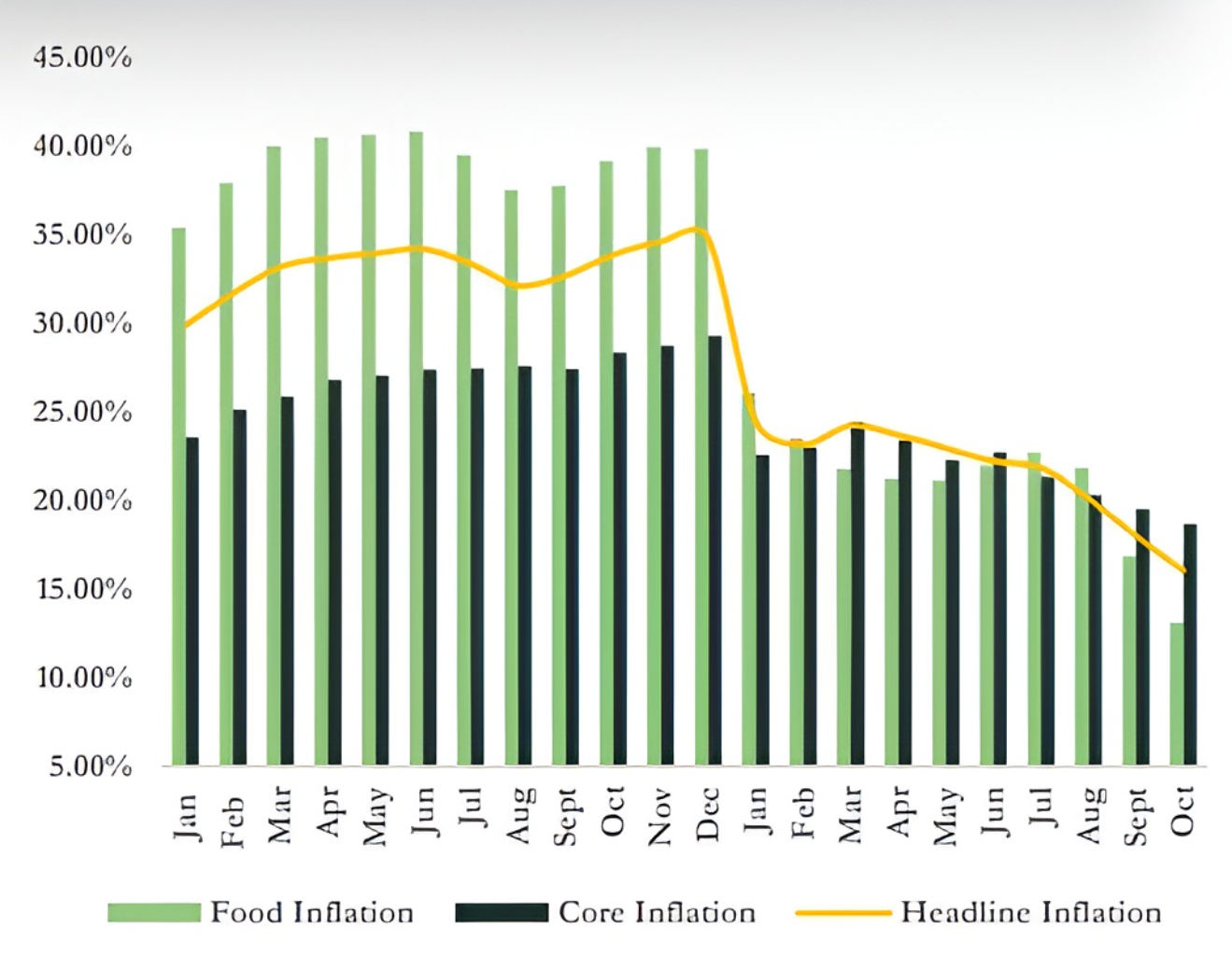
Inflation dynamics improved during the period, with headline inflation moderating to 15.15% in December 2025 from 17.33% in November, according to the National Bureau of Statistics. This decline was largely
driven by the adoption of a revised Consumer Price Index methodology, which rebased the index to 2024 and transitioned to a 12-month average reference period. Under the previous 2009 methodology, inflation would have remained significantly higher, underscoring the technical component of the observed disinflation.

Nonetheless, underlying price pressures also eased, with food inflations lowing for the fifth consecutive month to 10.84%, supported by seasonal harvest effects and a firmer naira, while core inflation declined to 18.63% from 20.59%, reflecting reduced pass-through from exchange rate pressures.

Inflation Trajectory
In the foreign exchange market, stability at the Nigerian Foreign Exchange Market (NFEM) window improved noticeably in January. The naira strengthened toward the end of the month, closing within
the ₦1,386/$ to ₦1,401/$ range, as foreign portfolio inflows increased and liquidity conditions improved. Attractive domestic yields, coupled with enhanced confidence in policy direction, encouraged offshore participation in the fixed income market, easing demand pressures on the currency. This was further supported by improved supply from exporters and market participants, reinforcing near-term exchange rate resilience

Economic activity indicators also pointed to strengthening momentum. The Central Bank of Nigeria’s composite Purchasing Managers’ Index rose to 57.6 points in December 2025, marking the fastest pace of expansion in nearly five years and extending the expansionary trend to thirteen consecutive months.


Growth was broad-based across sectors, with agriculture leading, followed by strong recoveries in industrial output and services activity. The PMI data suggest improving business confidence and strengthening domestic demand entering 2026.Nigeria’s international financial standing improved further during the month, following its formal removal from the European Union’s list of high-risk third countries for money laundering and terrorism financing, effective January 29, 2026. This development followed Nigeria’s earlier exit from the Financial Action Task Force grey list in October 2025 and represents a significant milestone in restoring global credibility. The delisting is expected to reduce transaction friction for cross-border flows, improve correspondent banking relationships, and broaden the base of international investors engaging with Nigerian assets.

The improving macro narrative was reinforced by the International Monetary Fund’s upward revision of Nigeria’s 2026 growth forecast to 4.4% in its January World Economic Outlook update. The revision reflects confidence in ongoing structural reforms, improved macroeconomic coordination, and stronger productivity across agriculture, manufacturing, and services. Nigeria is now positioned as a notable contributor to global growth in 2026, with an outlook that compares favorably to several peer economies.  

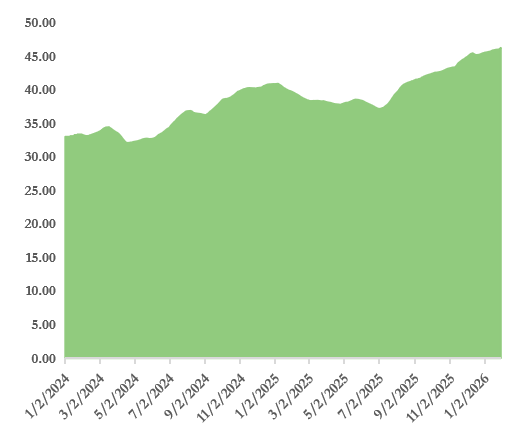
External buffers continued to strengthen, providing additional support to macro stability. Gross external reserves rose to approximately $46.1 billion by the end of January, up from $45.0 billion at the close of 2025. The improvement was driven by higher oil receipts, steady diaspora remittances, and sustained portfolio inflows. Forward projections suggest reserves could exceed $51billion by year-end, reinforcing the Central Bank’s capacity to manage currency volatility and absorb external shocks.


MACROS

Looking ahead to February 2026, inflation is expected to continue its gradual moderation, supported by base effects from the revised CPI methodology, stable exchange rate conditions, and easing food supply pressures. Headline inflation is likely to trend marginally lower or remain broadly stable in the near term. However, risks to this outlook include potential energy price shocks, changes to administered prices, or renewed exchange rate volatility, particularly if global commodity prices spike or domestic supply disruptions emerge.

The exchange rate is expected to remain relatively stable in February, with the naira likely to trade around the ₦1,400/$ level, supported by sustained portfolio inflows, improved reserve buffers, and ongoing price discovery at the NFEM window. Nonetheless, downside risks persist, including the possibility of capital flow reversals if global financial conditions tighten, heightened geopolitical tensions affecting oil markets, or delays in oil production recovery. Maintaining confidence in policy consistency and reform implementation will remain critical to preserving near-term currency stability.

The macroeconomic environment entering February 2026 reflects an improving balance, with stabilization increasingly anchored by structural reforms rather than temporary market interventions. While vulnerabilities remain, the convergence of moderating inflation, strengthening external buffers, and rising international confidence provides a more resilient foundation for economic and financial market performance in the months ahead.

The Nigerian equities market began 2026 on a relatively positive footing, extending the bullish momentum seen in late 2025. This performance was underpinned by improving macroeconomic signals that suggested early signs of economic stabilization, alongside renewed investor confidence. As a result, total market capitalization on the Nigerian Exchange (NGX) increased by ₦6.8 trillion during January, closing at ₦106.15 trillion compared to ₦99.38 trillion at the end of December 2025 

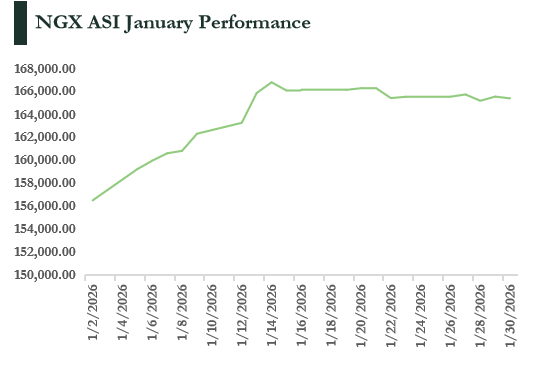
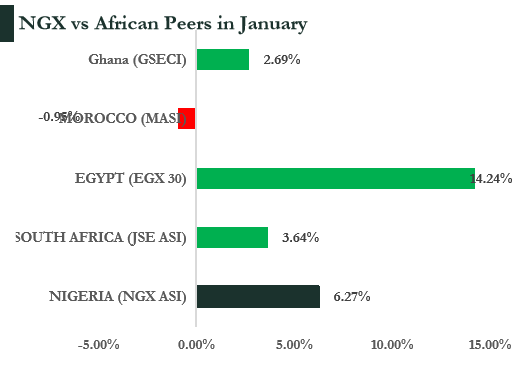
This 6.8% month-on-month expansion was largely driven by price appreciation in major blue-chip stocks, complemented by fresh capital inflows through primary market activities. Reflecting these gains, the NGX All-Share Index (ASI) delivered a strong start to the year, recording both month-to-date and year-to-date returns of 6.27% to close January at 165,370.40 points.
This performance was not an isolated development but broadly aligned with trends across global and Pan-African equity markets. Notably, the NGX outperformed several African peers, including the BRVM and the Moroccan exchange, which recorded more muted starts to the year.


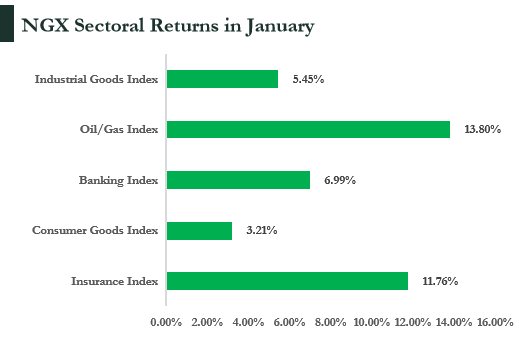
Sectoral performance on the NGX in January 2026 largely reflected the broader market’s bullish tone, with most indices closing the month in positive territory as investors selectively rotated into high-conviction sectors. The Oil and Gas index emerged as the top performer, advancing by 13.80%, driven by price gains in key integrated energy stocks such as SEPLAT (+15.34%) and ARADEL (+16.45%). Institutional confidence was further reinforced by improved governance sentiment following strategic board appointments, including the induction of Mr. Tony Elumelu to Seplat Energy’s board.

The Insurance index followed closely, rising by 11.76% on the back of ongoing recapitalization efforts and broad-based price appreciation across the sector. Notable gainers included NEM Insurance (+19.40%), AIICO (+10.82%), Veritas Kapital (+43.27%), and Mutual Benefits Assurance (+34.84%), reflecting improving sentiment toward balance sheet strengthening and earnings recovery prospects.

The Banking index posted a solid 6.99% gain, supported by renewed interest in fundamentally strong lenders such as GTCO (+9.15%), Zenith Bank (+15.61%), Wema Bank (+14.71%), and Access Holdings (+7.62%), as investors positioned for resilient earnings and attractive dividend yields. Similarly, the Industrial Goods index advanced by 5.45%, driven largely by gains in Dangote Cement (+4.27%) and Lafarge Africa (+16.73%), amid sustained demand expectations within the construction value chain.

Meanwhile, the Consumer Goods index added 3.21%, extending its steady appreciation after emerging as the bestperforming sector in 2025. Gains in Nestlé Nigeria (+10.00%), Cadbury Nigeria (+11.85%), Unilever Nigeria (+8.33%), and Dangote Sugar (+8.33%) underscored continued investor preference for companies with relatively strong pricing power and improving margin outlooks.
Despite the NGX All-Share Index delivering a 6.27% return in January, stock-level performance was highly dispersed, creating meaningful alpha opportunities for active managers. Several mid- and small-cap stocks recorded outsized gains, driven by sector repositioning, low-float dynamics, and renewed speculative interest. Deap Capital Management & Trust Plc (+394.21%) and SCOA Nigeria Plc (+345.07%) led the advancers, while strong performances were also recorded in NCR Nigeria Plc (+173.73%), Zichis Agro Allied Industries Plc (+131%), particularly notable as a recent IPO, and Multiverse Mining, supported by improving sentiment in the mining and basic materials sector.

On the downside, a small number of stocks underperformed, largely due to profit-taking following extended rallies rather than fundamental weakness. Ikeja Hotel Plc (-23.03%) declined as investors locked in gains in the hospitality sector, while Juli Plc (- 9.93%) and Austin Laz (-8.24%) faced selling pressure amid rotation within the retail and services space. Conoil Plc (-9.72%) also recorded a modest pullback, standing out as a rare decliner within the Oil and Gas sector, with price weakness largely reflecting technical corrections.

Market direction in February is expected to be driven largely by the release of audited 2025 financial results and dividend announcements. Nigeria’s dividend season typically supports equity prices, as investors rotate toward fundamentally strong, high-yield stocks. The banking sector should remain the center of activity amid ongoing recapitalization, while potential large-scale listings, such as the anticipated Dangote Refinery IPO, present upside catalysts for market liquidity and capitalization. Continued traction on the Growth Board also points to a growing pipeline of SME listings, particularly in agriculture and technology. Macroeconomic risks remain centered on inflation trends and monetary policy. However, strong market capitalization and resilient earnings among large-cap stocks suggest the NGX is well positioned to sustain positive momentum into February 2026.

FIXED INCOME

Domestic Money Market and System Liquidity

The Nigerian fixed income market in January 2026 was characterized by ample system liquidity, shifting yield dynamics, and improved investor confidence following favorable macroeconomic developments.

Market sentiment was largely shaped by the moderation in headline inflation and the Central Bank of Nigeria’s decision to maintain a tight but stable monetary policy stance. These factors drove strong participation at primary market auctions and contributed to yield compression toward the latter part of the month.

A key catalyst was the National Bureau of Statistics’ release of December 2025 inflation data, which showed headline inflation easing to 15.15% from 17.33% in November. The decline was primarily attributed to revisions in the Consumer Price Index methodology, including rebasing to 2024 and the adoption of a 12- month average reference period. This perceived disinflationary trend supported fixed income demand and reinforced expectations of yield stabilization.

Against this backdrop, the CBN retained the Monetary Policy Rate at 27.0% at its January meeting, signaling policy continuity. The moderation in inflation expectations provided a tailwind for fixed income instruments, particularly at the long end of the Treasury curve, as investors increasingly priced in lower real yield pressures.

In the Treasury bills primary market, investor demand remained robust throughout the month. At the January 7 auction, the CBN offered ₦1.15 trillion across the 91-day, 182-day, and 364-day tenors, attracting total subscriptions of ₦1.54 trillion and a bid-cover ratio of 1.35x. Although stop rates increased across all tenors, clearing at 15.80%, 16.50%, and 18.47%, respectively, strong participation
underscored sustained appetite for short-dated government securities.
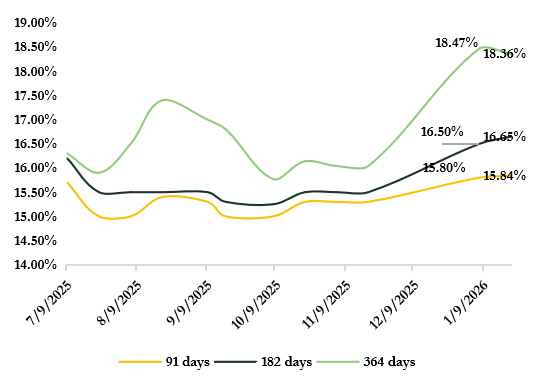
 

Demand intensified at the January 21 auction, where ₦1.15 trillion was again offered. Total subscriptions surged to ₦3.44 trillion, translating to a bid-cover ratio of 3.24x, with particularly strong interest in longer-dated bills. While stop rates for the 91-day and 182-day instruments edged higher to 15.84% and 16.65%, the 364-day bill cleared lower at 18.36%, reflecting growing investor preference for duration. The
relatively low allotment rate suggests that unmet bids are likely to flow into the secondary market.

Eurobonds and Global Confidence

Nigerian Eurobonds traded with mixed-to-moderately positive sentiment in January 2026, shaped by a combination of global macroeconomic developments, geopolitical risks, and improving domestic fundamentals. Early in the month, investor sentiment was cautious amid heightened global risk aversion, driven by volatility in energy markets, geopolitical tensions in the Middle East, and supply disruptions caused by severe winter storms in the United States. These factors contributed to short-term oil price volatility, with Brent crude briefly trading above USD70/bbl as markets repriced supply risks.

Additional uncertainty stemmed from concerns around U.S. foreign policy actions, including interventions in Venezuela, which raised the prospect of disruptions to global oil supply. Given Nigeria’s continued reliance on oil revenues, sustained volatility in crude prices remained a key macro risk, influencing foreign investor positioning in Nigerian sovereign debt during the early part of the month.

Mid-month sentiment improved as U.S. Treasury yields eased and oil prices stabilized following their initial spike. Softer U.S. jobless claims and the U.S. Federal Reserve’s decision to hold policy rates reinforced expectations of a prolonged pause through most of H1 2026, following cumulative rate cuts in late 2025. This shift supported renewed demand for emerging market debt, leading to modest yield compression across Nigerian Eurobonds.

By the latter half of January, buying interest strengthened, driving the average benchmark Nigerian Eurobond yield down to approximately 7.12%. However, profit-taking ahead of key global macro events and renewed upward pressure on U.S. Treasury yields toward month-end resulted in mild volatility, with the benchmark yield ticking higher to around 7.23% in the final trading sessions. Nigerian Eurobonds closed the month slightly weaker on a month-on-month basis, reflecting cautious investor positioning amid persistent global uncertainty.

FIXED INCOME

A major positive development during the month was Nigeria’s formal removal from the European Union’s list of high-risk third countries for money laundering and terrorism financing, which took effect on January 29, 2026. This followed Nigeria’s earlier exit from the Financial Action Task Force (FATF) grey list in October 2025, representing a significant improvement in the country’s international financial standing. The delisting is expected to reduce compliance costs for cross-border transactions, enhance correspondent banking relationships, and foster broader participation by foreign portfolio investors in Nigeria’s fixed income and Eurobond markets in the medium term.

OUTLOOK

The Nigerian fixed-income market is set for a gradual recalibration. With the CBN maintaining tight monetary conditions and ample liquidity, short-term NTB yields are expected to ease, providing investors with opportunities to secure attractive returns ahead of potential rate adjustments. Demand for longer-dated government bonds remains robust, supported by stable coupon payments and potential capital appreciation in a moderating yield environment.

Fiscal discipline and strategic debt management will be key. A shift toward lower-cost, long-dated instruments, including diaspora bonds, Sukuk, or green bonds, combined with efforts to diversify non-oil revenues, could enhance debt sustainability and bolster investor confidence. This outlook depends on continued macro stability, easing inflationary pressures, and contained external debt risks.

On the external front, while Eurobond issuances have drawn strong demand, global rate dynamics and geopolitical risks could pressure yields, underscoring the need for vigilance. Overall, highyield, long-term government debt and Tbills is likely to remain a preferred allocation in the near to medium term, contingent on stable macro fundamentals and consistent policy execution.
December 2025 Inflation Report

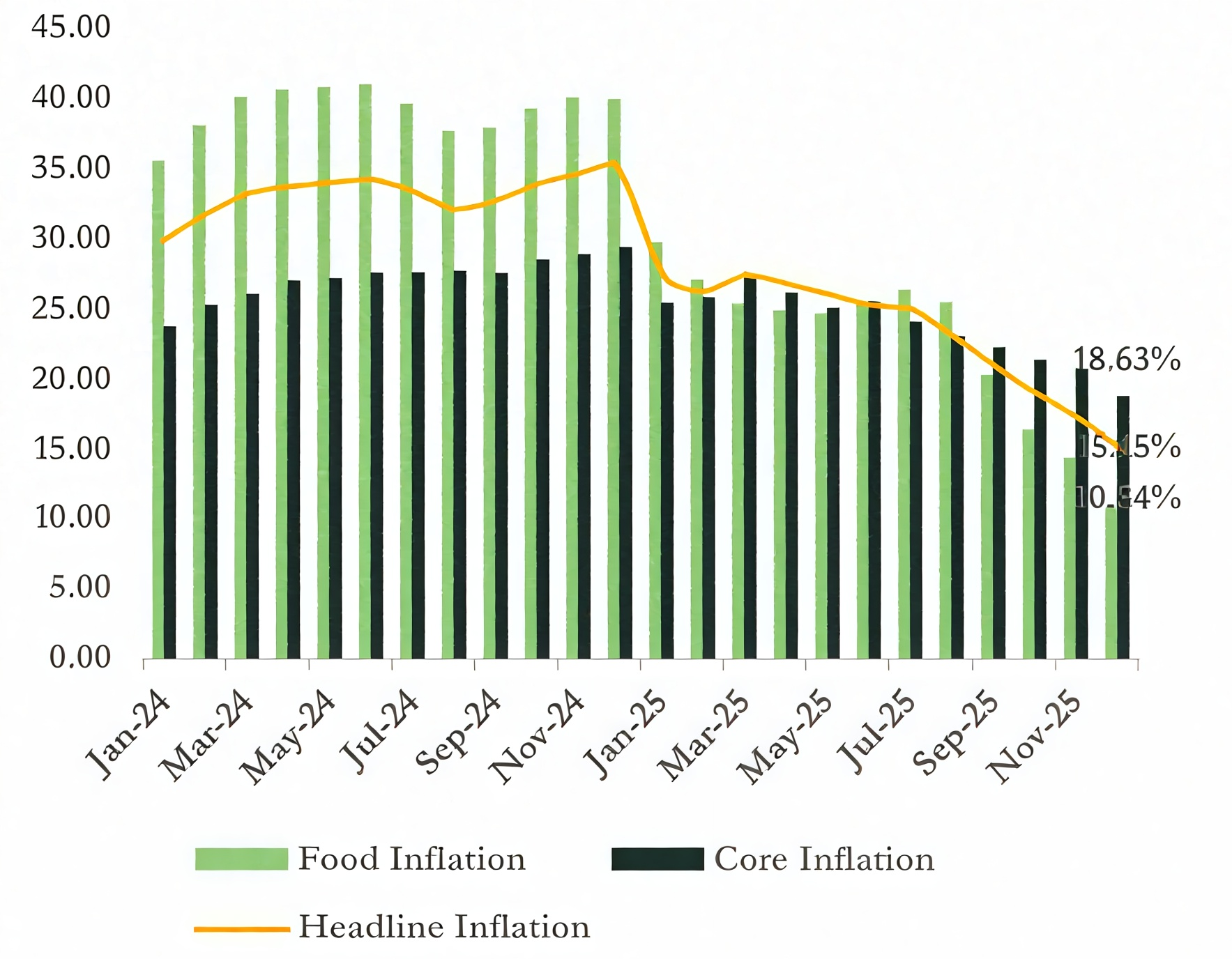
Inflation eased to 15.15% in December 2025 following an adjustment by the NBS.

Nigeria’s headline inflation moderated to 15.15% year-on year in December 2025, down from 17.33% in November, reflecting a methodological adjustment by the National Bureau of Statistics (NBS). 

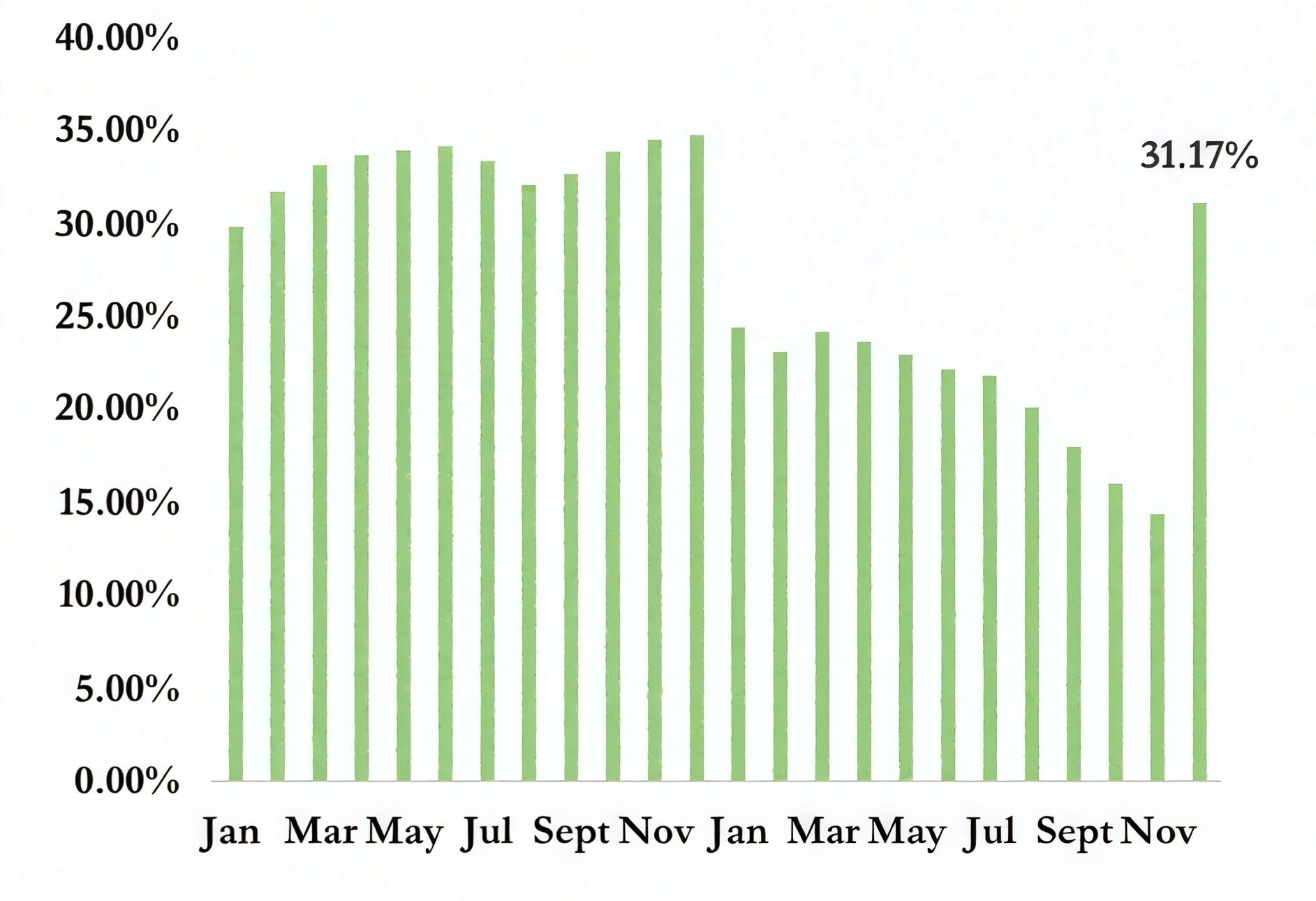
The decline follows the NBS’s adoption of a 12-month average CPI for 2024 as the reference period, replacing the previous single-month (December 2024) base. This change was implemented to eliminate an artificial inflation spike caused by base effects. Under the former methodology, headline inflation for December 2025 was projected to surge to about 31.2%, a distortion driven by the comparison base rather than a sharp acceleration in underlying price pressures. The revised approach, therefore, provides a more accurate representation of inflation dynamics, even as price levels remain elevated. 

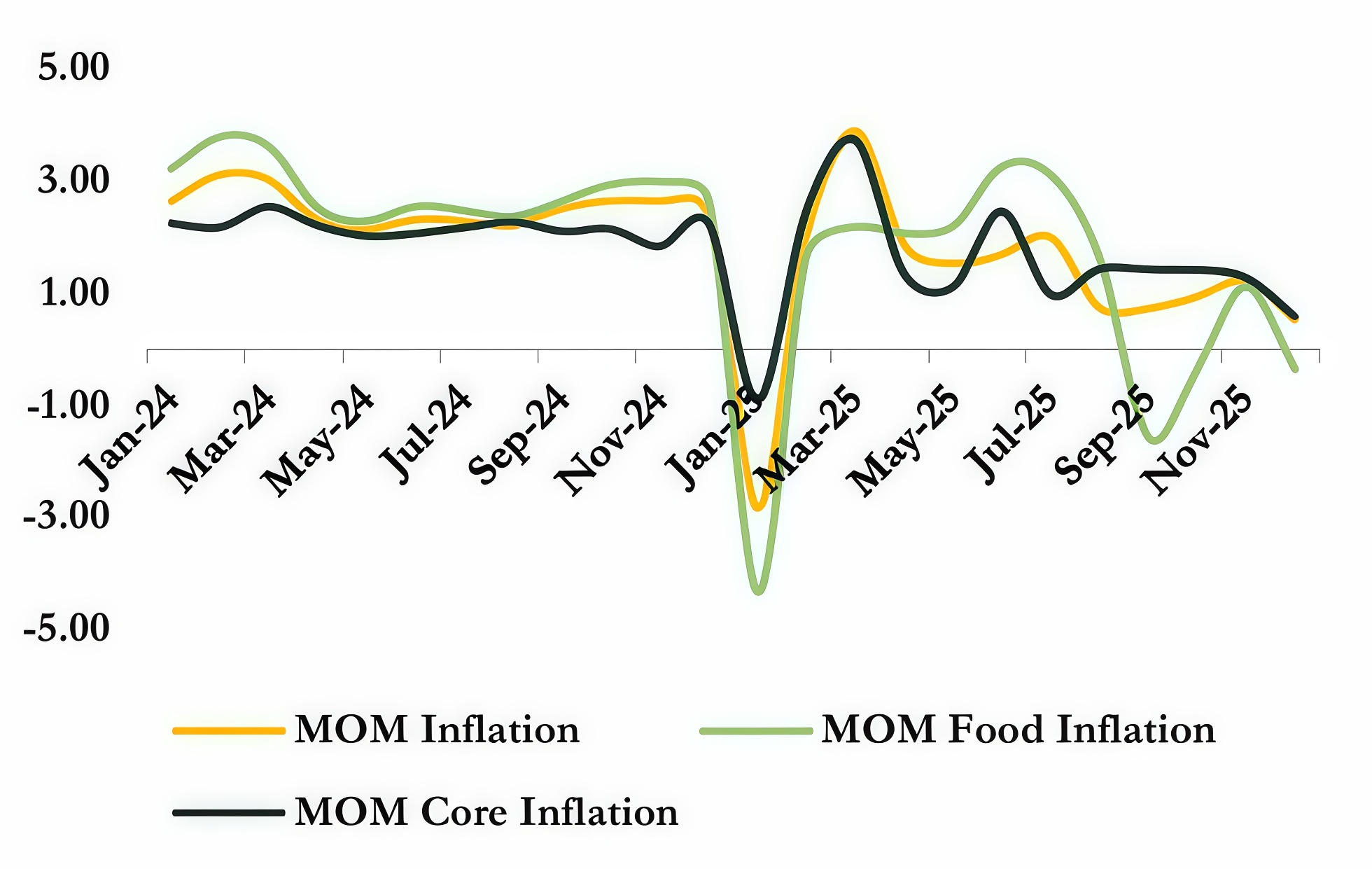
On a disaggregated basis, food inflation eased to 10.84% in December from 14.21% in November, while core inflation moderated to 18.63% from 20.59%, reflecting a broad based slowdown in price momentum following the methodological adjustment. On a month-on-month basis, headline inflation decelerated to 0.54%, down from 1.22% in the prior month. Food inflation turned negative at 0.36%, compared with 1.13% in November, suggesting easing short-term price pressures, while core inflation slowed to 0.58% from 1.28% previously.

OUTLOOK

We expect headline inflation to maintain a downward trajectory in 2026, supported by a relatively stable exchange rate, which should help moderate imported inflation pressures. Additionally, a weaker global oil market, driven by a projected supply surplus, could further ease global energy prices. However, this presents a double-edged risk: while lower energy prices may reduce domestic fuel costs and ease transportation and logistics expenses, weaker oil prices could also dampen export earnings and exert pressure on the naira, potentially offsetting gains through higher import costs.

On balance, the anticipated disinflation trend may create room for the Monetary Policy Committee to begin a gradual pivot away from its current hawkish stance, should macroeconomic conditions remain supportive.

Y-o-Y Inflation Trend New CPI Series
Y-o-Y Inflation Trend Old CPI Series
M-O-M Inflation Trend New CPI Series

Nigeria Economic Review

2025 Economic Review

Economic Growth Performance

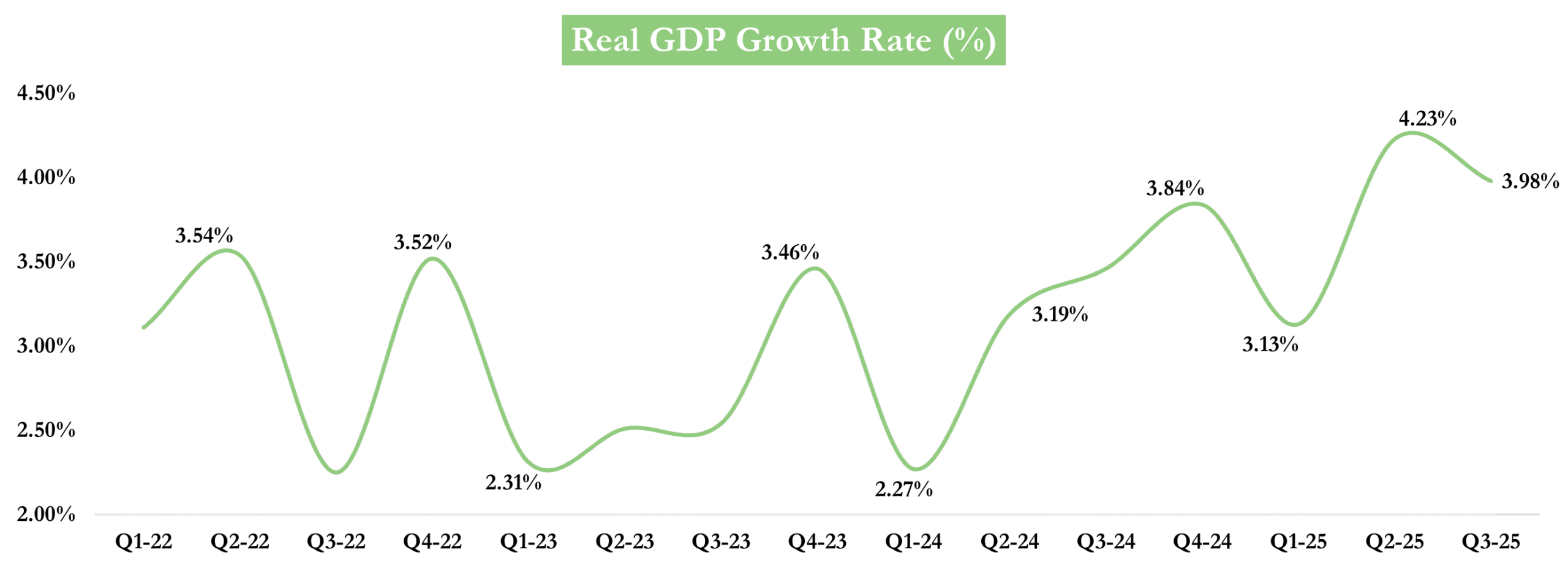
  • Nigeria’s economy expanded by 3.98% y/y in Q3 2025, easing from 4.23% in Q2, its strongest growth since Q2 2021, but outperforming the 3.86% growth recorded in Q3 2024.
  • The non-oil sector, which accounted for 96.6% of total output, grew by 3.91% vs Q2: 3.64%, supported by stronger activity in agriculture (3.79%), financial and insurance services (19.63%), trade (1.98%), construction (5.57%), and modest gains across ICT, real estate, and manufacturing.
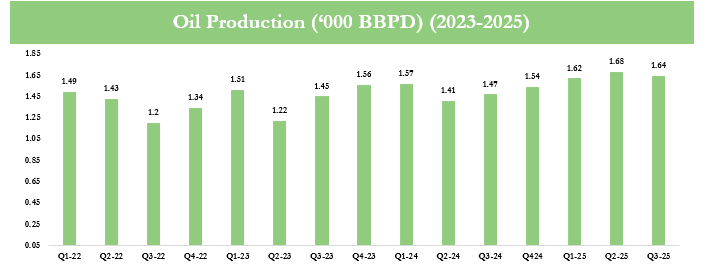
  • In contrast, the oil sector grew by 5.84% y/y, a sharp slowdown from 20.46% in the previous quarter, reflecting weaker crude output. Oil production averaged 1.64 mbpd in Q3, slightly below Q2’s 1.68 mbpd but above the 1.47 mbpd recorded in Q3 2024.

Source: NBS, BRB Research

Inflation and Monetary Policy
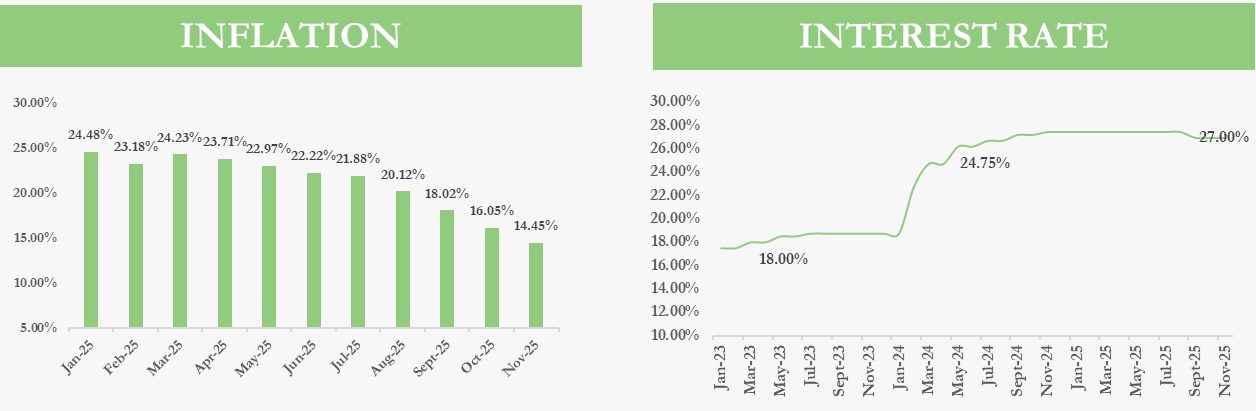
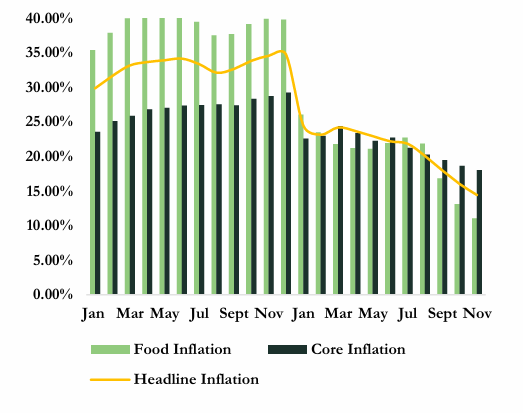
  • Nigeria’s inflation environment has continued to improve, with headline inflation easing for the eighth consecutive month and settling at 14.45% from 16.05% year-on-year in November 2025. The deceleration has been driven largely by the rebasing effect, softer food price pressures, improved supply conditions, and a more stable foreign-exchange market. Core inflation remains elevated at 18.04% while Food inflation moderated to 11.08%, reflecting a gradual easing in underlying price pressures.
  • Against this backdrop, the Central Bank of Nigeria maintained the MPR at 27% in November 2025, following a 50-bps reduction in September, as it sought to consolidate recent progress on disinflation. Although headline inflation continued to moderate, the MPC noted that underlying price pressures remain elevated, warranting a cautious pause. The adjustment of the policy corridor to +50/-450 bps from +250/-250 bps signals a subtly more accommodative liquidity framework. The stance shows a gradual shift from aggressive tightening toward a more balanced macro-stabilization

Source: NBS, BRB Research                                                Source: Investing.com, BRB Research

Exchange Rate and Foreign Reserves
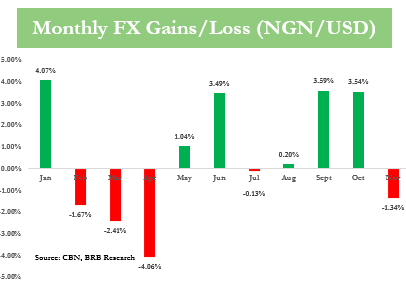
  • Nigeria’s foreign exchange market stabilized in 2025 following previous periods of sharp depreciation, supported by CBN initiatives including the Electronic FX Matching System (EFEMS), transparent auction processes, and partial market liberalization. These measures enhanced liquidity and narrowed the gap between official and parallel market rates, with the naira strengthening to ₦1,446 per US dollar by November 2025 from ₦1,535 per US dollar at the end of 2024. 
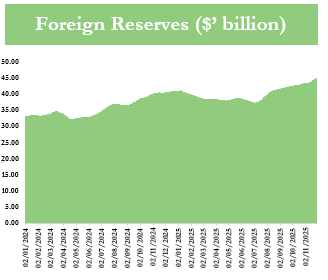
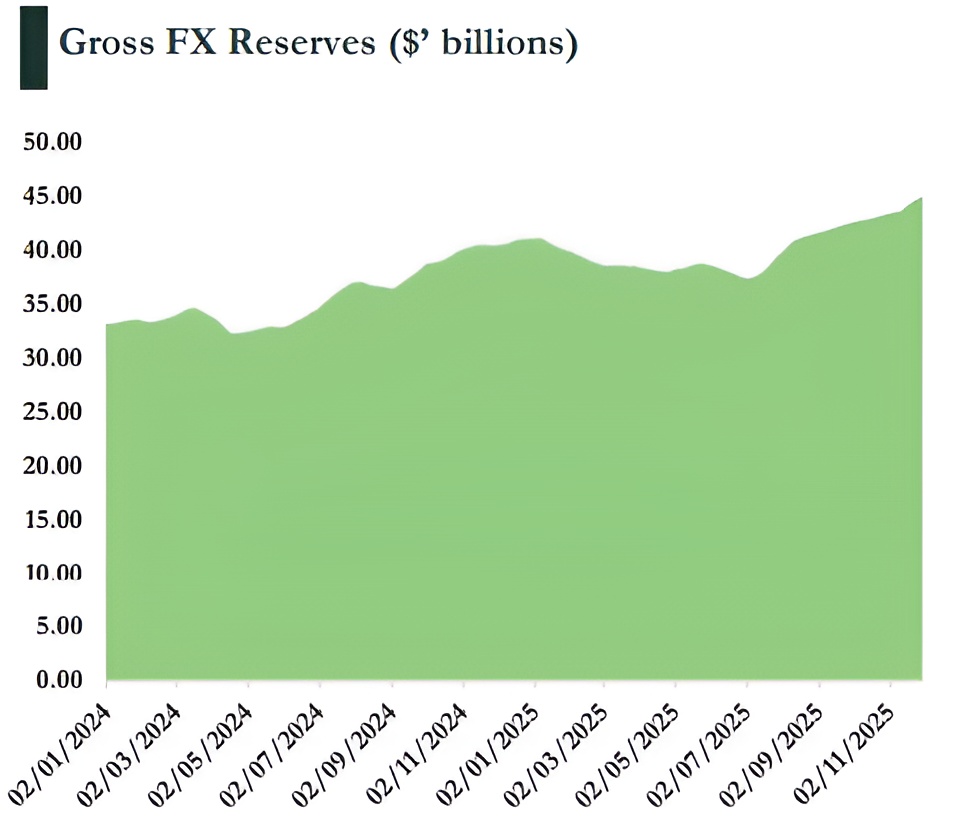
  • Foreign reserves rose from USD 40.2 billion at the end of 2024 to USD 44.67 billion by November 2025, reflecting strengthened external sector conditions. The recent Eurobond issuance of $2.35 billion provided a significant boost to reserve buffers, complementing gains from improved oil production, firmer export receipts, steady remittance inflows, and renewed foreign portfolio investment.
Oil Market
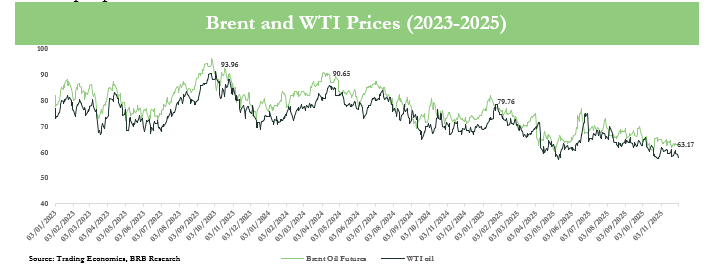
  • The 2025 oil market began the year in relative balance, with temporary supply disruptions from seasonal factors and unplanned non-OPEC+ outages offset by robust structural supply. Demand growth remained moderate amid macroeconomic uncertainty, resulting in stable prices with limited volatility. 
  • In Q2, OPEC+ began rolling back voluntary production cuts while output from the U.S. and Brazil remained strong, leading to rising supply that outpaced demand and triggered bearish sentiment. By Q3, oversupply became the defining feature, as global production exceeded demand, inventories accumulated, and analysts revised downward full-year price expectations.
  • The year closed with the supply glut persisting into Q4; inventories remained elevated, and prices stabilized below mid-year peaks following OPEC+ guidance on potential early-2026 output pauses.
Oil Production
  • In Q3 2025, Nigeria’s average daily oil production stood at 1.64 million barrels, up 0.17 mbpd from Q3 2024 but slightly below Q2 2025’s 1.68 mbpd. The sector’s gradual recovery in 2025 was supported by improved security, enhanced pipeline integrity, and more coordinated upstream operations. Production averaged 1.66 mbpd in H1, peaked at 1.68 mbpd in Q2, the highest since 2020, and moderated slightly in Q3, reflecting ongoing operational adjustments and maintenance activities. 
  • The rebound helped reinforce external balances and foreign-exchange supply, but output volatility remained a feature of the sector’s performance. Despite the improvement, production levels fell short of the government’s 2025 target of 2.06 million barrels per day, reflecting ongoing structural challenges. Crude theft, infrastructure constraints, and intermittent operational disruptions continued to weigh on capacity utilization, limiting the pace of recovery.

Source: NBS, BRB Research 

Economic Outlook for year 2026

2026 Outlook
  • Nigeria’s economy is expected to expand over the near term, with the IMF projecting GDP growth of 3.9% in 2025 and 4.2% in 2026, supported by stable oil inflows, improving oil production levels, and greater policy consistency. 
  • Headline inflation is expected to continue its moderating trend in 2026, easing toward 11.56% by year-end, supported by a stable exchange rate, cautious monetary policy, and weaker energy prices. This disinflationary environment is likely to provide the Central Bank of Nigeria with scope to maintain a neutral to mildly accommodative monetary policy stance. We anticipate a potential recalibration of the MPR, with a projected easing of around 200 basis points by mid-2026, contingent on inflation remaining firmly anchored and underlying price pressures remaining subdued.
  • Several risks could reverse the projected downward trend in inflation in 2026. Pressure on the exchange rate may increase the cost of imported goods, while elevated government spending ahead of elections could inject additional liquidity, boosting prices. Structural challenges, including insecurity in key food-producing regions, may constrain supply and exert upward pressure on food prices. External shocks, such as volatility in global oil markets, also represent a potential upside risk to inflation during the year. 
  • Despite these challenges, higher foreign reserve buffers and reforms in the foreign-exchange market, including enhanced transparency and more efficient EFEMS operations,  should help limit exchange-rate volatility and strengthen overall broader macroeconomic stability. These developments, alongside easing inflation and relatively stable macro fundamentals, are likely to support investor sentiment and attract modest portfolio inflows over the course of the year.
  • The macroeconomic environment nonetheless remains sensitive to external and domestic shocks. Oil-price volatility continues to pose the most significant risk to fiscal stability and FX supply, while uncertainty around the revised Capital Gains Tax framework and lingering security concerns may temper investor appetite in the near term. Even so, the broader environment suggests cautiously improving conditions for Nigeria’s asset management and investment industry in 2026.
  • Global oil market dynamics will be pivotal for Nigeria in 2026, with a structural supply surplus expected to persist due to strong non-OPEC+ production from the U.S. and Brazil and a measured supply approach from OPEC+. Demand growth will remain concentrated in non-OECD Asia, while elevated inventories are likely to keep Brent crude in the mid-to-low $50s per barrel. A potential peace deal between Russia and Ukraine could further soften prices if sanctions on Russian oil are eased, adding additional barrels to the market. Although geopolitical disruptions could still trigger short-term volatility, sustained low prices may eventually dampen non-OPEC+ investment. 

Equities Market Review

Nigeria Equities Market Performance 2025

The Nigerian equity market delivered a powerful yet volatile performance in 2025, emerging as one of the strongest markets globally. For most of the year, sentiment was supported by market-friendly reforms, resilient corporate earnings, improved foreign-exchange conditions and strong domestic liquidity.

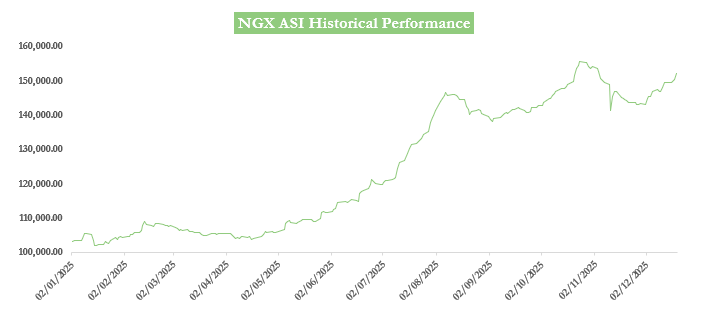
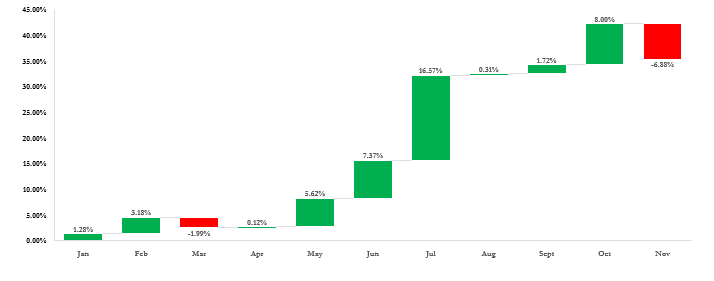
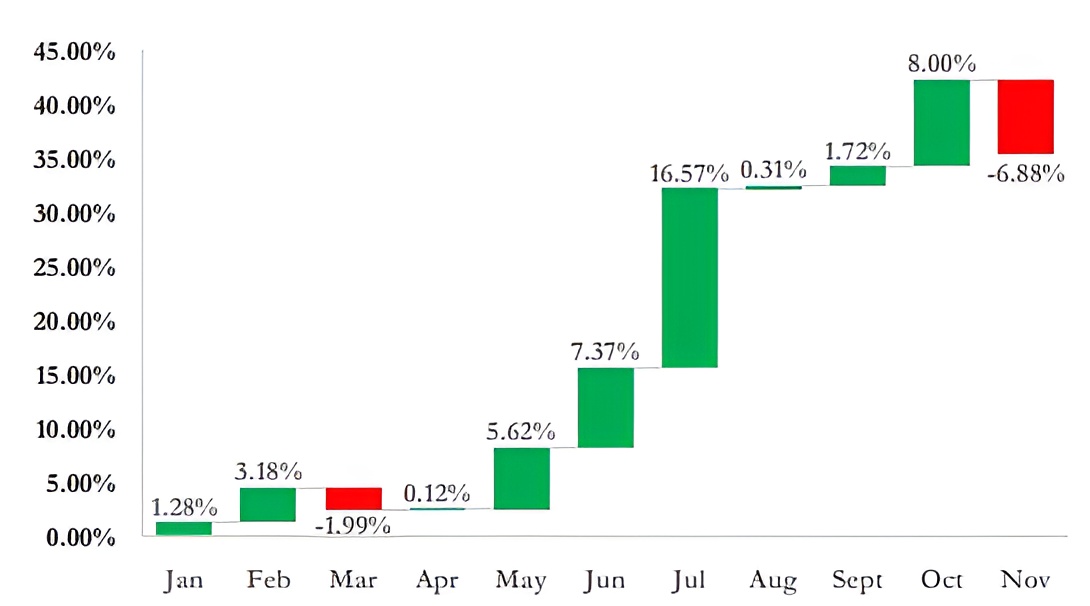
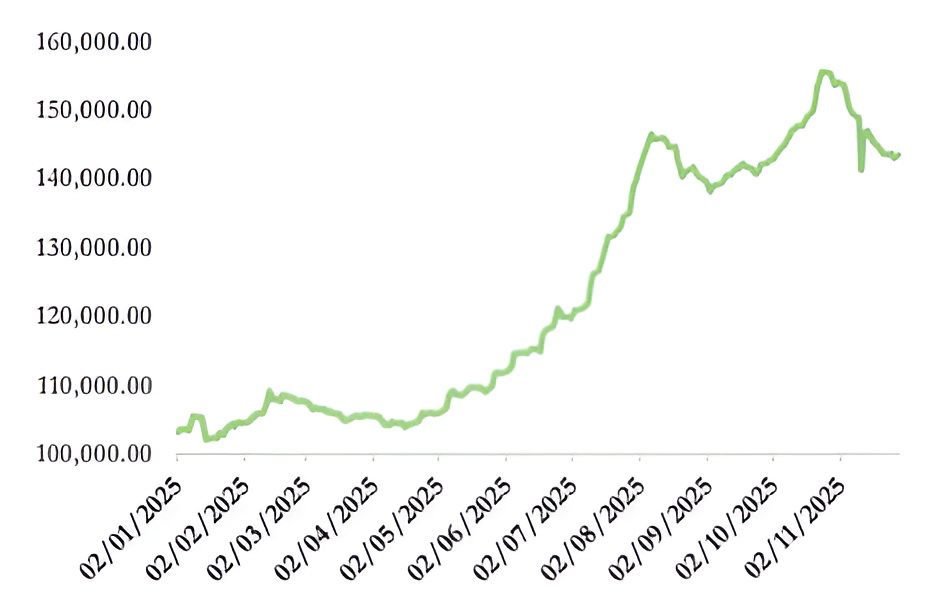
Market capitalization rose from ₦62.76 trillion at end-2024 to ₦91.29 trillion by late November, reflecting a 45.45% increase in investor wealth. Gains strengthened through the third quarter, with the ASI up 16.57% by mid-year and nearly 50% by October. The NGX All-Share Index (ASI) also advanced significantly, climbing from 102,926.40 points to over 150,000 points in October before moderating to 143,520.52 in November.

Investor participation was robust, driven by both domestic and foreign flows. Total transactions for the first eight months of the year rose by 99% to ₦6.92 trillion. Foreign portfolio inflows increased by 122% to ₦1.45 trillion, aided by improved FX liquidity and clearer exit conditions, whereas domestic investors contributed over ₦5.46 trillion, reinforcing their leadership in market activity. These flows were complemented by the performance of several high-growth stocks, with tickers like BetaGlass, MTN, Ellah Lakes, WEMA Bank, NCR, MBENEFIT, UACN, and ASO Savings delivering returns ranging between 100% and more than 500%, reflecting strong liquidity and high conviction in select counters.

NGX ASI Monthly Returns

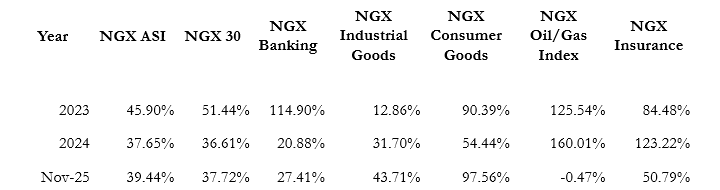
Sector performance highlighted the breadth of the rally. Consumer goods companies led with over 100% year-to-date gains by October, supported by strong local production and pricing resilience amid FX constraints. The Insurance Index rose sharply on recapitalization expectations, while the Banking Index, though third in returns, remained the most actively traded, reflecting strong institutional interest. Industrial goods stocks also saw significant demand, whereas the Oil & Gas Index lagged for most of the year due to sector-specific challenges.

NGX Sectoral Performance (2023-2025)

However, the positive momentum was interrupted in November by the sharpest correction of the year. Market capitalization fell by about ₦6.54 trillion following uncertainty over the proposed changes to the Capital Gains Tax framework. The shift from a flat 10% rate to a progressive structure of up to 30% triggered aggressive profit-taking and capital repatriation by foreign investors. Combined with geopolitical concerns, the policy announcement dampened sentiment and illustrated how quickly fiscal decisions can offset months of progress driven by monetary reforms and FX stability.

2026 Outlook

Outlook

Building on a robust 2025, Nigeria’s equities market is poised for a strong 2026 performance, with potential total returns exceeding 30%, supported by ongoing reforms, macroeconomic stability, and stronger corporate earnings. Key growth drivers include continued sectoral diversification, with consumer goods, industrials, and financials expected to anchor performance, alongside rising dividends that enhance total shareholder returns.

Market sentiment will be increasingly shaped by company-specific fundamentals, with investors focusing on earnings quality, balance sheet strength, and cash-flow resilience. The anticipated listing of NNPC Limited and Dangote Refinery next year could serve as a major liquidity and valuation catalyst, attracting both domestic and foreign capital.

Further support is expected from positive macroeconomic factors, including easing inflation, stable interest rates, and an improved foreign-exchange environment, as well as regulatory clarity that strengthens investor confidence. Active portfolio management, diversification across high-quality sectors, and close monitoring of earnings, FX developments, and policy changes will remain essential to navigate potential volatility and capture upside opportunities.

November 2025 Inflation Report

Inflation eased to 14.45% in November

Nigeria’s headline inflation rate eased to 14.45% year-on year in November 2025, down from 16.05% in October, marking the eighth consecutive month of disinflation and coming in below the Federal Government’s 2025 inflation target of 15.75%. The moderation was driven by a slowdown in both major components of inflation. Food inflation declined to 11.08% from 13.12%, while core inflation eased to 18.04% from 18.69%, reflecting softer price pressures across key non-food categories.

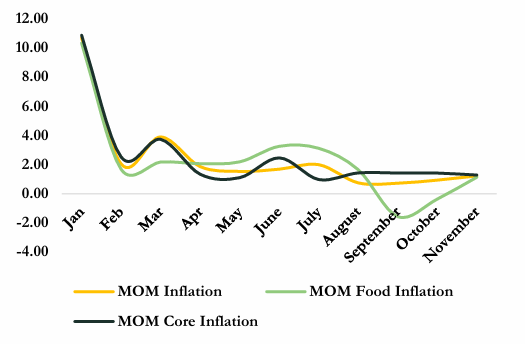
However, price pressures persisted on a month-on-month basis, with headline inflation rising to 1.22%, compared with 0.93% in October, indicating continued increases in price levels. The acceleration was largely food-driven, as food inflation rebounded to 1.13% from -0.37%, reversing the disinflation observed in the previous two months. This reflects renewed pressure from seasonal demand ahead of the festive period, alongside security-related disruptions in key food-producing regions that have constrained harvest activities.

In contrast, core inflation moderated to 1.28% from 1.42%, supported by slower price increases in financial services (0.18% vs 1.71%), education (0.02% vs 0.78%), and information and communication (0.12% vs 0.54%).

OUTLOOK

Looking ahead to November, we expect headline inflation to tick up in December 2025, driven by festive-related demand pressures and food supply constraints, with the increase amplified by base effects following the CPI rebasing. 

Beyond this temporary rise, we anticipate the disinflation trend to resume from early 2026, potentially creating room for the Monetary Policy Committee to begin a gradual pivot
away from its current hawkish stance.

Y-o-Y Inflation Trend
M-O-M Inflation Trend

Monthly Market Brief (November 2025)

MACROS

In November 2025, the Central Bank of Nigeria (CBN) maintained a restrictive monetary policy stance, signaling a measured approach toward sustaining price stability and anchoring market expectations. At the 303rd Monetary Policy Committee meeting, the CBN held the Monetary Policy Rate at 27.0% and retained the Cash Reserve Requirement for deposit money banks at 45%, reflecting its commitment to liquidity sterilization and broader disinflationary objectives. The Standing Facility corridor was adjusted to +50/-450 basis points, a technical refinement designed to improve short-term liquidity management and tighten the transmission of policy signals to the money market. 

The retention of the MPR followed the first-rate adjustment since September, demonstrating the MPC’s preference for caution. Policymakers emphasized that the cumulative effects of previous tightening cycles are still unfolding, and premature easing could undermine gains in inflation control and destabilize the foreign exchange market by weakening the yield differential that attracts portfolio inflows. This approach reflects the dual mandate of controlling inflation while preserving external sector stability.

October CPI data indicated continued disinflation, with headline inflation moderating to 16.05% year-on-year and month-on-month price growth slowing to 0.90%. However, underlying structural pressures persist. Core inflation, which excludes volatile food and energy components, remained elevated at 18.70%, driven by sustained cost pressures in housing, utilities, and transportation. Food inflation, at 13.12%, reflects the vulnerability of the agricultural sector to security challenges, including banditry and logistics disruptions, which continue to exert upward pressure on prices despite monetary tightening.

Inflation Trajectory

In November 2025, the Nigerian foreign exchange market continued to consolidate stability, reflecting the effectiveness of the CBN’s unification and market-driven reforms. The Naira traded steadily around the mid-₦1,440/US$ range, posting a monthly depreciation of -1.34%. The elimination of the chronic arbitrage
premium underscores the success of structural reforms, enhancing investor confidence and supporting efficient market functioning. 

The currency’s resilience was underpinned by a combination of restrictive monetary policy, robust foreign portfolio inflows, and structural measures to expand non-oil FX supply, including the NRBVN platform to facilitate diaspora remittances. High interest rates remain a key tool in attracting capital, though they create a structural reliance on foreign inflows for stability. 

Nigeria’s external sector strengthened markedly, with Gross External Reserves rising to US$46.7 billion by mid-November, equivalent to 10.3 months of import cover. The successful US$2.35 billion Eurobond issuance contributed to reserve accumulation, reinforcing Nigeria’s capacity to absorb external shocks and  maintain macroeconomic stability

EQUITIES

The Nigerian equity market in November 2025 experienced a sharp correction as fiscal policy uncertainty and restrictive monetary conditions combined to trigger widespread profit-taking and capital flight. The NGX All-Share Index dropped from 154,126.46 points at the end of October to 143,520.53 points by 28 November, reflecting a month-to-date decline of 6.88%. Similarly, market capitalization shrank by ₦6.54 trillion, declining from ₦97.83 trillion to ₦91.29 trillion. Despite the pullback, the year-to-date gain remained positive at 39.44%, still lower than the 49.74% recorded at the end of the previous month, reflecting the strong rally seen earlier in 2025. 

The market downturn was primarily driven by profit-taking activities and the government’s announcement of an increase in the capital gains tax for foreign investors from 10% to 30% on non-reinvested equity sales, effective January 2026, which prompted foreign portfolio investors to realize gains under the existing lower tax regime. Concurrently, the Central Bank of Nigeria maintained a rigid monetary tightening stance, keeping the Monetary Policy Rate at 27.0%, further discouraging equity speculation and sustaining pressure on valuation multiples.

NGX ASI Monthly Returns

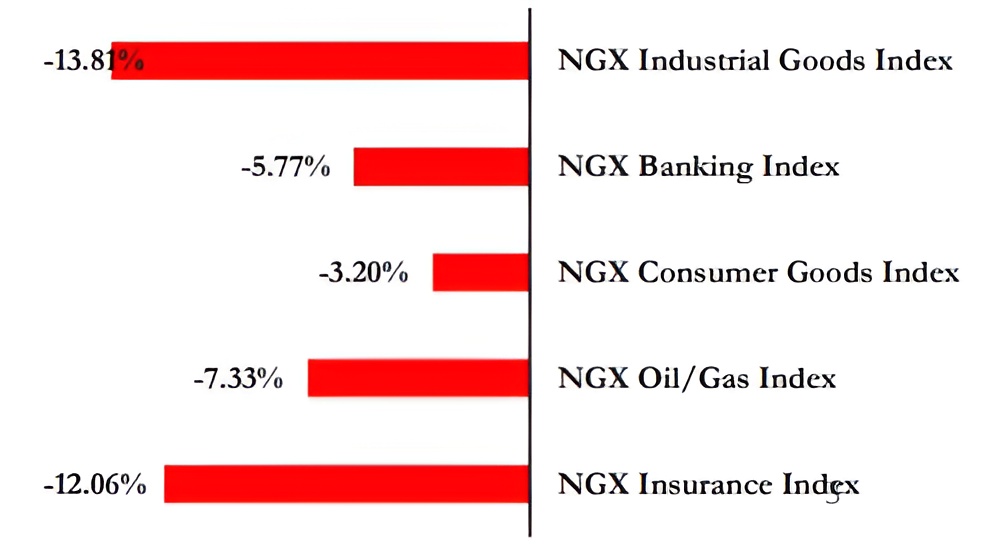
Sectoral performance across the Nigerian Exchange in November 2025 reflected a broad-based market retreat driven by sharp foreign portfolio outflows and sustained monetary tightening. The Industrial Goods Index recorded the steepest decline at –13.81% (vs. +17.50% in October), as major cement names, DANGCEM (–19.00%), BUACEM (–11.11%), and WAPCO (–4.29%), faced heavy selloffs following the announcement of the 30% capital gains tax on nonreinvested foreign equity sales. Earlier valuation gains, boosted by FX-driven earnings expansion, unwound quickly under higher discount-rate conditions.

The Banking Index fell –5.77% (vs. –3.15%), pressured by broad profit-taking and portfolio repositioning. Tier-1 names such as ACCESSCORP (–14.11%), GTCO (–12.28%), UBA (–8.99%), Zenith (–4.76%), and WEMA (–10.51%) declined as elevated liquidity constraints, particularly the 45% CRR, kept funding conditions tight. Although strong earnings fundamentals encouraged intermittent bargain hunting, they were insufficient to offset overall downside momentum.

NGX ASI Historical Performance

Consumer Goods slipped –3.20% (vs. +4.85%), reflecting a relatively defensive pullback. Losses in Champion          (–17.33%), Nestle (–7.05%), Cadbury (–7.43%), and DangSugar (–7.60%) weighed on the index, though domestic-focused midcaps such as Unilever showed resilience and helped drive a mild late- month rebound, including a 0.57% uptick on November 28. 

The Oil & Gas Index contracted –7.33% (vs. +15.45%), driven by profit-taking in ARADEL (–11.76%) and OANDO   (–19.15%) amid weaker sentiment toward energy names due to global crude uncertainty and domestic macro risks. Insurance posted one of the sharpest declines at –12.06% (vs.+3.37%), as risk aversion triggered broad sell pressure across small- and mid-cap counters. AIICO (-15.35%), NEM (14.74%), and MBENEFIT (- 13.95%) were the major drivers of the loss. 

Overall, November’s performance was dominated by aggressive divestment linked to fiscal policy signals, particularly the CGT announcement, overshadowing sectorspecific fundamentals. While select rebounds emerged toward the month-end, sectoral dynamics remained shaped by tight monetary conditions, fragile investor sentiment, and a pronounced rotation away from high-beta Nigerian equities.

NGX Sectoral Returns in November

In line with this broad weakness, several blue-chip counters were also among the worst-performing stocks for the month, reflecting the heavy divestment pressure triggered by the CGT announcement.
High-beta, foreign-held names such as DANGCEM (–19.00%), ACCESSCORP (–14.11%), GTCO (–12.28%), UBA (–8.99%), Zenith Bank (–4.76%), and NESTLE (–7.05%) saw sharp declines as investors exited large-cap positions to rebalance risk. 

Nonetheless, a few tickers bucked the trend, with NCR (+241.56%), Ikeja Hotel (+60.90%), Eunisell (+37.29%), and UACN (+18.65%) emerging as notable outperformers, largely driven by companyspecific developments and their previously low-price levels, rather than the overall market trend.

Outlook

Market sentiment entering December is expected to remain cautious, despite the federal government’s clarification of the 30% CGT, which introduced key provisions such as grandfathering for pre-2026 gains, exemptions for retail portfolios below ₦150 million, and reinvestment relief. This will ease investor anxiety and create room for cautious re-entry, though liquidity remains tight and macroeconomic conditions continue to limit risk-taking. The rollout of the CBN’s new fixed-income trading and settlement framework will also be closely watched, as any operational disruptions could affect secondary-market liquidity and influence portfolio positioning. 

Despite these headwinds, December may still benefit from seasonal drivers such as dividend positioning, year-end rebalancing, and selective bargain-hunting following November’s valuation reset. However, sustained recovery will depend on consistent policy execution, improved communication, and early signs of monetary easing. Until these conditions improve, overall market posture is likely to remain defensive, with investors prioritizing stability while gradually rebuilding exposure ahead of the 2026 trading year.

FIXED INCOME

Domestic Money Market and System Liquidity

The Nigerian Treasury Bills (NTB) market in November 2025 recorded strong, yield-sensitive demand as investors sought safety amid heightened equity-market volatility and tight monetary conditions. Elevated system liquidity and attractive sovereign yields supported aggressive bidding across all tenors, particularly the 364-day maturity, as investors aimed to lock in double-digit rates ahead of potential monetary policy adjustments in early 2026. Throughout the month, the primary market remained a key destination for domestic institutional funds, reflecting a strategic reallocation toward risk-free assets.

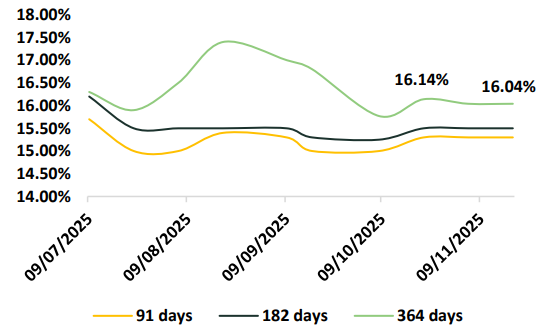
The early-November auction on November 5 set the demand tone for the month, with stop rates clearing at 15.30% (91-day), 15.50% (182-day), and 16.04% (364-day). Despite relatively modest issuance sizes, subscription levels, especially the ₦1.14 trillion demand for the 364-day bill, far exceeded offer amounts, underscoring the strength of investor appetite for longer tenor bills. The tight bidding bands reflected disciplined pricing, driven by expectations that yields were near their cyclical peak and could moderate in subsequent months. These conditions led investors to prioritize locking in term yields while seeking tactical duration exposure.

A major inflection in the yield environment emerged in mid-to-late November following the Monetary Policy Committee’s decision to maintain the MPR at 27.0%, which helped stabilize rate expectations. This policy continuity enabled the CBN to engineer a substantial downward adjustment in stop rates during the November 19 auction. The 364-day rate dropped sharply to 16.04%, a notable decline from the 20%+ levels recorded in mid-month auctions, while subscription still reached ₦1.03 trillion (2.3x oversubscription). The successful rate compression demonstrated the CBN’s capacity to exert decisive
control over front-end yields, exploiting deep domestic liquidity to reduce government borrowing costs while maintaining strong participation.

Eurobonds and Global Confidence

Nigeria’s engagement with the international capital markets in November 2025 was defined by a strong primary issuance outcome juxtaposed against renewed secondary-market volatility. The country’s US$2.35 billion Eurobond deal, issued across 10-year and 20-year tranches, attracted exceptionally strong investor interest, reflecting ample global liquidity and sustained appetite for high-yielding emerging-market sovereign debt. However, the supportive issuance backdrop contrasted with a wider recalibration of risk premiums in secondary trading as global conditions became less favourable toward emerging-market assets. 

The primary issuance on 5 November 2025 saw Nigeria successfully price US$1.25 billion of 10-year notes at 8.625% and US$1.10 billion of 20-year notes at 9.125%. Demand was exceptionally robust, with the order book reportedly surpassing US$13 billion, translating to roughly 12x oversubscription, one of the largest ever recorded for a Nigerian sovereign sale. While the strong subscription secured the government’s target capital for deficit financing, the elevated pricing levels underscored that  investor enthusiasm was overwhelmingly yield-driven. Despite the large order book, markets required materially high coupons to compensate for Nigeria’s fiscal vulnerabilities, reserve adequacy concerns, and broader macro risk environment. 

In contrast to the upbeat primary-market experience, Nigeria’s existing Eurobonds posted mixed performance throughout November. Secondary market yields widened by 32 basis points on average, closing at 7.97%, reflecting renewed selling pressure across the curve. This repricing indicated that the market remained sensitive to shifts in global risk appetite, with investors demanding additional term premium to hold Nigerian debt despite the successful primary issuance. The divergence between primarymarket strength and secondary-market weakness further highlights the distinction between issuance-driven liquidity dynamics and underlying credit-risk perceptions. 

Two key external factors shaped this upward yield drift. First, a strengthening of the U.S. dollar contributed to modest shifts away from emerging-market hard-currency bonds, raising funding costs for sovereigns like Nigeria. Geopolitical tensions between the United States and the Nigerian government also pushed yields higher. After the U.S. issued strong political warnings about Nigeria’s internal security situation, investors became more cautious. The resulting increase in yields illustrates Nigeria’s structural sensitivity to non-economic shocks and underscores the risks inherent in relying heavily on Eurobond financing. As global conditions remain fluid, Nigeria’s external debt trajectory will depend increasingly on stabilizing domestic macro fundamentals and rebuilding investor confidence in its long-term credit outlook.

FIXED INCOME

The Federal Government of Nigeria (FGN) conducted bond auctions on November 24, 2025, offering ₦230 billion each of the 17.945% FGN AUG 2030 (5-Year) and 17.95% FGN JUN 2032 (7-Year) bonds. Subscription levels highlighted stronger investor interest in the medium-term tenor: the 7-Year bond recorded a subscription of ₦509.392 billion, compared to ₦147.869 billion for the 5-Year bond. Successful allotments amounted to ₦448.722 billion and ₦134.799 billion, respectively, reflecting moderate oversubscription for both instruments. 

Yields were set at 15.900% for the 5-Year bond and 16.000% for the 7-Year bond, below the initial coupon rates, signaling effective yield management by the Debt Management Office (DMO). The noncompetitive allotment of ₦6.0 billion for the 7-Year bond also underscores continued demand from smaller investors and domestic institutions. 

The auction outcomes suggest stabilizing borrowing costs for the federal government, with minimal upward pressure on yields. Coupled with recent trends in T-Bills and short-term securities, the results indicate a coordinated approach to maintaining domestic debt market stability, reflecting investor confidence in Nigeria’s debt instruments amid prevailing macroeconomic conditions.

OUTLOOK

The Nigerian fixed-income market is set for a gradual recalibration. With the CBN maintaining tight monetary conditions and ample liquidity, short-term NTB yields are expected to ease, providing investors with opportunities to secure attractive returns ahead of potential rate adjustments. Demand for longer-dated government bonds remains robust, supported by stable coupon payments and potential capital appreciation in a moderating yield environment. 

Fiscal discipline and strategic debt management will be key. A shift toward lower-cost, long-dated instruments, including diaspora bonds, Sukuk, or green bonds, combined with efforts to diversify non-oil revenues, could enhance debt sustainability and bolster investor confidence. This outlook depends on continued macro stability, easing inflationary pressures, and contained external debt risks. 

On the external front, while Eurobond issuances have drawn strong demand, global rate dynamics and geopolitical risks could pressure yields, underscoring the need for vigilance. Overall, highyield, long-term government debt is likely to remain a preferred allocation in the near to medium term, contingent on stable macro fundamentals and consistent policy execution.
Post MPC Meeting Report (November Meeting)

MPC RETAINS INTEREST RATE AMID DISINFLATIONARY TREND

The Monetary Policy Committee (MPC) of the Central Bank of Nigeria concluded its 303rd meeting on November 25, 2025, delivering a policy stance characterized by headline rate stability and technical tightening through adjustments to operational tools. While the benchmark rate was held constant, the recalibration of the asymmetric corridor signals a continued commitment to disinflation, FX stability, and prudent liquidity management.

Policy Decisions and Rationale

The MPC opted for continuity in its primary policy levers:

  • MPR: Retained at 27.00%, reinforcing the CBN’s tight monetary posture.
  • CRR: Maintained at 45% for DMBs, 16% for merchant banks, and 75% for non-TSA public sector deposits
  • Liquidity Ratio: Held steady at 30%.
  • Asymmetric corridor was adjusted to +50/-450bps from the previous +250/-250bps around the MPR

The most notable action was the adjustment of the asymmetric corridor to +50/-450 bps around the MPR, resulting in a 27.5% Standing Lending Facility (SLF) and a 22.5% Standing Deposit Facility (SDF). This shift away from the previously wider symmetric corridor effectively tightens the lower bound of system liquidity, discouraging excess reserves and strengthening monetary transmission. The Committee emphasized that maintaining this stance allows the lagged effects of earlier rate hikes to permeate the economy, given the ongoing disinflationary trend.

Inflation continued its steady downward trajectory in October 2025, marking the seventh consecutive month of disinflation. Headline inflation declined to 16.05% (y/y) from 18.02% in September, reflecting broad-based moderation across both food and core components. 

Food inflation eased sharply to 13.12% from 16.87% in the previous month. This improvement was supported by improved domestic food supply associated with the seasonal harvest cycle, sustained exchange rate stability, and favourable base-year effects. Meanwhile, core inflation slowed to 18.69% (y/y) from 19.53%, driven largely by lower prices in furnishing and household maintenance categories.

Inflation Trend Y-o-Y

Despite these positive developments, the MPC emphasized that inflation remains elevated in double digits, underscoring the need for persistent policy vigilance to sustain and deepen the disinflation trend. The MPC noted that the broad-based deceleration across headline, food, and core measures reflects the combined effect of past tightening, exchange-rate stabilization, and improved domestic supply conditions. The Committee expects this disinflationary momentum to persist into the near term. 

The MPC’s emphasis on persistently high core inflation, which remains above the headline rate, reinforces the view that underlying price pressures are structural rather than transitory. This validates the Committee’s cautious posture and signals that broad monetary easing will not commence until inflation expectations are firmly anchored and macroeconomic stability is consolidated.

The Global View

On the global front, the CBN assessed a cautiously improving environment. Global output is projected to strengthen on improved trade negotiations, accommodative policies in advanced economies, and easing geopolitical tensions. However, risks remain from potential protectionism, geoeconomic fragmentation, and renewed U.S.–China trade frictions. Global inflation is projected to continue moderating into 2026.

Domestically, the MPC highlighted the strong external sector position, supported by a surplus current account, continued reserve accretion, and Stable FX market conditions. These improvements, alongside collaborative fiscal–monetary reforms, supported recent upgrades to Nigeria’s sovereign rating and the country’s delisting from the FATF grey list, strengthening investor confidence.

Market Impact

The MPC’s decision to hold the MPR at 27% disrupted expectations for a sizeable rate cut, preventing the
significant yield compression previously anticipated across the money and bond markets. This outcome stabilizes fixed-income pricing by reducing immediate downside risk to asset values and provides clearer rate visibility after recent market volatility.

In the Treasury Bills and OMO segments, yields are expected to remain elevated. The latest auction results show the 364-day NTB marginal rate at 16.04%, broadly aligned with headline inflation at 16.05%. This ensures short-term instruments continue to deliver attractive real returns, supporting strong investor demand under the high-interest-rate environment. 

From a portfolio positioning standpoint, the policy hold reinforces an Overweight bias toward short- to mid-tenor sovereign securities, where yields remain compelling and liquidity conditions tight. Demand for NTBs, OMOs, and 3–7-year FGN bonds is expected to stay robust, given banks’ need to manage liquidity under elevated CRR pressures and limited alternative outlets.

Equity market implications are mixed. A selective approach is warranted, emphasizing fundamentally strong, dividend-paying companies with sustainable pricing power. Large-cap banks are likely to maintain earnings resilience through elevated net interest margins, while firms with significant FX revenues stand to benefit from exchange-rate stability. Conversely, highly leveraged manufacturers and consumer-facing companies reliant on expensive domestic credit remain vulnerable under the prolonged tight monetary stance.

Outlook

The Committee projects that disinflation will continue in the near term, driven by the lagged effects of previous policy tightening, stable FX conditions, and improved domestic food supply associated with the seasonal harvest cycle. However, inflation remains elevated, and the MPC is expected to maintain a restrictive stance until a more durable decline in core and headline inflation is secured. 

For financial markets, this suggests a continued environment of high yields, tight liquidity, and selective risk-taking. Fixed-income valuations will remain anchored by the elevated policy rate, while equity performance will diverge along sectoral and balance-sheet strengths. 

The next MPC meeting is scheduled for February 23–24, 2026, where the trajectory of inflation, FX stability, and fiscal alignment will determine whether current tightening is sustained or provides room for cautious policy recalibration.

Monthly Market Brief (October 2025)

MACROS

Disinflation and FX Stability Strengthen Market Confidence

Nigeria’s macroeconomic landscape underwent a decisive re-anchoring in October 2025, driven by sustained disinflation, improved FX stability, and major sovereign risk reductions. The removal of Nigeria from the FATF grey list marked a critical turning point, materially lowering compliance friction for cross-border transactions and restoring investor confidence in the country’s financial governance architecture. These structural improvements, underpinned by renewed access to Eurobond markets, strengthened external buffers and provided a more predictable macroeconomic environment for both domestic and offshore investors. 

Disinflation remained the centerpiece of market confidence, with headline inflation moderating for the sixth consecutive month to 18.02%, its lowest level since mid-2022. Food and core inflation continued to soften, reflecting reduced currency pass-through and more stable price formation. Through this period, the CBN maintained a tight monetary stance, holding the MPR at 27.00% and preserving a strong positive real interest rate. This combination of anchored FX markets and high real returns sustained robust foreign portfolio inflows and reinforced expectations that Nigeria is nearing the end of its monetary tightening cycle.

Inflation Trajectory
FX Driven by Reserve Accumulation and Cautious Policy Easing

The Nigerian currency market in October 2025 consolidated its stabilization trend, supported by improved foreign exchange liquidity, strengthened external reserves, and a cautiously moderated monetary stance from the Central Bank of Nigeria. Throughout the month, th Naira maintained a firm performance in the Nigerian Foreign Exchange Market, benefitting from sustained inflows and a more orderly price formation environment. The official exchange rate appreciated modestly, closing October at approximately ₦1,421 per U.S. Dollar, marking one of its strongest levels since the operationalization of the electronic FX trading framework. This reflected the combined effect of improved supply conditions and heightened investor confidence following Nigeria’s reinforced macro stability narrative.

Gross FX Reserves ($’ billions)

The availability of FX in the official market was bolstered by rising capital importation, particularly Foreign Portfolio Investment attracted to Nigeria’s positive real interest rate environment, and improved dollar inflows from the oil sector, which recorded a notable recovery during the year. These fiscal adjustments complemented monetary tightening to reinforce a more balanced foreign exchange liquidity profile. 

A critical anchor for the Naira’s stability during the month was the continued accumulation of external reserves. Gross external reserves strengthened from roughly $42.26 billion at the end of September to an estimated $43.15 billion at the close of October, reflecting almost $900 million in net reserve accretion. This improvement enhanced the central bank’s capacity to meet legitimate FX demand and significantly reduced speculative pressures in both the official and parallel markets. The strengthened reserve position also supported the broader policy narrative that Nigeria’s external balances were becoming more resilient, a development that reinforced confidence across the investment community. 

Although the Central Bank did not convene a Monetary Policy Committee meeting in October, market conditions continued to adjust to the earlier reduction in the Monetary Policy Rate to 27.00%. The September rate cut, the first in five years, signalled a cautious shift toward policy easing, made possible by sustained disinflation and greater FX stability. Even with the reduction, the 27.00% MPR remained sufficiently high to maintain Nigeria’s competitive carry advantage, encouraging further portfolio inflows. The Cash Reserve Ratio remained elevated, absorbing substantial liquidity from the banking system and helping to maintain disciplined monetary conditions consistent with the central bank’s broader stabilization objectives.

EQUITIES

Sustained Bull Momentum and Strategic Capital Rotation

The Nigerian bourse (NGX) closed October 2025 on a bullish note, extending its strong year-long performance and ranking among the world’s best-performing equity markets. The month was driven by
significant institutional capital rotation and renewed investor appetite for blue-chip stocks, whichmpushed the NGX All-Share Index (ASI) beyond the 150,000-point psychological threshold. The ASI rose by about 8.00% month-on-month (MoM) to close at 154,126.46 points, compared to a modest 1.72% gain in September. Consequently, market capitalization increased by ₦7.25 trillion, from ₦90.58 trillion in September to ₦97.83 trillion in October, reflecting substantial wealth creation within the period.  This strong monthly advance accelerated the Year-to-Date (YTD) return to approximately 51.22%, up from about 41.80% in September, cementing the market’s leadership position globally. 

This strong performance positioned October as the second-best month of 2025, behind the notable 16.57% rally recorded in July. The sustained rally highlights investors’ confidence in the resilience and value of Nigerian corporates despite high interest rates and declining fixed-income yields that would ordinarily divert liquidity away from equities.

NGX ASI Monthly Returns

Sectoral performance in October 2025 was broadly bullish, reflecting a distinct flight to quality as investors rotated capital into sectors with stronger earnings visibility and defensive fundamentals. The Industrial Goods Index (+17.50%) led the market, buoyed by institutional accumulation in cement and manufacturing stocks such as Dangote Cement (+26.64%), WAPCO (+15.91%), and BUA Cement (+12.50%),
supported by positive Q3 earnings and improved sentiment following Dangote Cement’s expansion into the Ivory Coast. 

Similarly, the Oil & Gas Index (+15.45%) benefited from rising global oil prices and large institutional trades concentrated in premium tickers like Aradel Holdings (+41.30%), Eterna (+29.08%), and Seplat (+10.00%), positioning the sector as a hedge against inflation and currency weakness. This suggests large-scale, sustained accumulation by major domestic institutional investors, such as pension funds, alongside possibly increased interest from sophisticated international investors seeking exposure to high-quality, fundamentally sound equity assets amidst global risk environments. This capital inflow demonstrates confidence that corporate earnings will continue to outpace macroeconomic volatility.

NGX ASI Historical Performance

The Consumer Goods Index (+4.85%) also advanced, driven by solid Q3 earnings expectations and pricing resilience from major firms including PZ (+21.74%), NASCON (+18.65%), and Vitafoam (+17.79%), while the Insurance Index (+3.37%) gained on the back of renewed interest in NEM (+19.64%) and
Mansard (+7.71%). 

In contrast, the Banking Index (-3.15%) was the only major laggard, reflecting profit-taking and capital reallocation rather than a fundamental sectoral decline. Following less impressive Q3 earnings, institutional investors strategically reduced exposure to Tier-1 banks such as Zenith Bank (-8.70%), GTCO (-4.69%), and Access Holdings (-4.68%) amid uncertainty surrounding regulatory capital recapitalization and liquidity demands. This selective sell-off underscores a deliberate shift in investor positioning, monetizing gains in liquid banking stocks to fund high-conviction moves into industrial and commodity-linked equities.

NGX Sectoral Returns in October
Sustained Bull Momentum and Strategic Capital Rotation

The list of the worst-performing stocks was dominated by small-to-mid cap equities that were acutely sensitive to weak corporate earnings, liquidity risk, and sector-specific challenges. The massive sectoral appreciation in Industrial Goods and Oil & Gas necessitates that the underlying bellwether stocks in these sectors deliver exceptional returns.

Outlook

In November, market activity is expected to be guided by an interplay of supportive corporate fundamentals and near-term risk triggers. On the upside, the release of 9M:2025 earnings across sectors is expected to drive further repricing of strong-performing stocks. A supportive macroeconomic environment, marked by easing inflation, stable interest rates, and rising oil prices, should help sustain valuations. Institutional investors are likely to maintain interest in fundamentally strong, high-quality stocks as a haven amid global uncertainty. 

Sectoral momentum remains skewed toward industrials, oil & gas and consumer goods, while banking may continue to underperform amid regulatory and capital pressures. Investors should monitor key triggers, upcoming earnings prints, inflation and rate surprises, FX/naira developments, and policy-tax changes, which could either reinforce the bullish trend or prompt liquidity tightening. 

However, the risk of profit-taking remains elevated: stocks that have delivered outsized gains may experience fund outflows, and uncertainties around the proposed Capital Gains Tax (CGT) could lead foreign and institutional investors to take pre-emptive positions out of the market.

FIXED INCOME

Disinflation and FX Stability Strengthen Market Confidence

October 2025 witnessed notable developments in the Nigerian fixed income market, shaped by dynamic liquidity conditions, active central bank interventions, and strong investor participation in both Treasury
Bills (NTBs) and Federal Government of Nigeria (FGN) Bond auctions. System liquidity experienced significant fluctuations, prompting continued monitoring and management by the Central Bank of Nigeria
(CBN) to maintain the restrictive monetary policy stance set by the 27.00% Monetary Policy Rate (MPR).

Investor appetite remained robust across primary auctions, particularly for longer-dated FGN Bonds, while secondary market activity reflected strategic positioning ahead of primary market events. Yield curve dynamics revealed an inversion in the nominal term structure, signaling market expectations of future monetary easing.

Domestic Money Market and System Liquidity

In October 2025, the Nigerian money market experienced significant liquidity fluctuations. Market liquidity started the month at ₦7.11 trillion on October 2, declined to ₦3.79 trillion by October 8, and later adjusted to ₦2.2 trillion on October 14 following Open Market Operation maturities. Despite these swings, the Central Bank of Nigeria (CBN) maintained a restrictive monetary stance, ensuring that the system
remained tightly controlled and that temporary liquidity surges did not spill over into unintended monetary easing or foreign exchange volatility. 

The CBN successfully anchored short-term interest rates throughout the month. The benchmark Open Buy Back (OBB) rate remained at 24.50%, while the Overnight (O/N) rate was tightly managed between 24.87% and 24.88%. These actions demonstrate the effectiveness of the CBN’s sterilization operations in absorbing excess liquidity and preserving the policy objectives set by the 27.00% Monetary Policy Rate.

Investor demand for Treasury Bills remained robust, highlighting strong confidence in risk-free government instruments. The October 8 NTB auction, offering ₦570 billion, was oversubscribed with ₦1.06 trillion in bids, while the October 22 auction saw ₦650 billion offered across three tenors and total bids of ₦750.91 billion. The 364-day bill cleared at a stop
rate of 16.14%, yielding 19.25%, above headline inflation but below the MPR, reflecting a deliberate strategy by the CBN to encourage banks to hold short-term government paper and limit speculative pressures in the broader market.

FGN Bond Market Review

The FGN Bond market drew significant attention, with the DMO offering ₦260 billion through the re-opening of the 5-year AUG 2030 and 7-year JUN 2032 bonds. Investor participation was exceptionally
strong, totaling ₦1.27 trillion, with demand heavily concentrated in the 7-year tenor, which was oversubscribed by more than eight times. This reflects market expectations for future capital appreciation and suggests that monetary tightening is approaching its peak. 

Marginal rates were set at 15.8320% for the 5-year bond and 15.8500% for the 7-year bond. Compared with the 364-day NTB yield of 19.25%, this represents a pronounced nominal yield curve inversion of roughly 340 basis points, signaling anticipation of future monetary easing. Investors increased duration exposure, favouring longer-term bonds over temporarily elevated short-term yields. 

Secondary market activity mirrored these dynamics. Treasury bills began the month with bullish sentiment, slightly compressing yields to 16.50%, while FGN bonds traded mixed as participants repositioned ahead of the auction. Post-auction, mid-to-long-term yields declined sharply, supported by residual unmet demand from the 7-year tenor. The yield curve inversion created strategic choices: short-term NTBs provided high carry, while mid-to-long-dated FGN bonds offered capital preservation and potential price appreciation as the CBN gradually normalizes the curve.

Eurobonds and Global Confidence

Nigeria’s U.S. dollar–denominated sovereign bonds delivered a strong performance in October, reinforcing the narrative of improving global investor confidence, both in Nigeria’s credit trajectory and in the broader African Eurobond space. 

Secondary market activity as of October 24, 2025, showed broad based tightening across the Nigerian Eurobond curve. The near-term 7.625% NOV 2025 bond traded at a yield of 4.337%, signaling very low perceived rollover or default risk, an outcome underpinned by improved liquidity conditions and effective debt management. 

Long-dated bonds also recorded notable price appreciation. The 10.375% DEC 2034 bond traded at 112.020, well above par, reflecting substantial repricing of Nigeria’s sovereign risk. Investors have adjusted their assessment of the country’s creditworthiness materially lower, driving yields down relative to issuance levels. These gains align with a year marked by improving fiscal indicators, better FX liquidity, and stronger policy credibility.

FIXED INCOME

OUTLOOK

October 2025 served as a validation point for Nigeria’s macroeconomic reform trajectory, cementing a high degree of confidence among both domestic and international investors. The stabilization of the Naira, the successful disinflationary path, and the enhanced sovereign credit profile (marked by the FATF removal and successful Eurobond issuance) all contribute to a highly constructive outlook for Nigerian fixed income assets.

October 2025 Inflation Report

Inflation Drops to 16.05% in October Amid Rising MoM Pressure

Nigeria’s headline inflation maintained its disinflationary trend in October 2025, extending a seven-month streak of annual moderation. The headline CPI moderated to 16.05% YoY from 18.02% in September, its lowest level since March 2022. This decline was driven by strong base effects from late-2024 inflation figures and seasonal supply relief from the peak harvest. 

However, despite the favourable annual trend, monthly indicators continued to reveal underlying inflationary firmness. MoM headline inflation accelerated to 0.93% from 0.72%, signalling renewed domestic cost pressures concentrated within the core basket. This occurred even as food inflation registered a negative MoM print, underscoring price pressure in the non-food component.

Food Inflation: Harvest-Driven Deflation Anchors the Headline Print

Food inflation delivered the strongest support to the headline print, with the YoY rate easing to 13.12% in
October from 16.87% in September, aided by favourable base effects and improved food supply conditions. MoM food inflation also turned negative at –0.37%, reflecting harvest-driven deflation across key staples and a temporary easing in near-term supply pressures.

However, this relief is expected to be short-lived, as seasonal supply normalization and higher post-harvest logistics costs are likely to drive food inflation back into positive monthly territory in the coming period. Moreover, with the festive season approaching, consumer front-loading and stronger demand are expected to exert additional upward pressure on food prices in the near term.

Y-o-Y Inflation Trend
Core Inflation: Persistent and Structurally Elevated

Core inflation remained structurally sticky despite some annual easing. The YoY core index moderated to 18.69% in October, marking its fourth consecutive monthly decline and reflecting improved FX liquidity and relative currency stability. Nonetheless, the core index remains higher than the headline index, underscoring persistent pressures across the non-food component. 

On a sequential basis, core inflation was unchanged at 1.416% MoM, matching September’s 1.417%. Elevated transport-related costs, driven by higher diesel prices and indirect pass-through from PMS adjustments, remain key contributors. Additionally, sustained price rigidity across accommodation, restaurant services, rents, and utility-linked components continues to reinforce the structural persistence of core inflation.

M-O-M Inflation Trend
Outlook

Looking ahead to November, the disinflationary trend is expected to continue, supported largely by strong base effects from late-2024. However, pressures are likely to intensify as the temporary food deflation seen in October unwinds with the tapering of harvest supply and rising post-harvest logistics costs. Core inflation may remain elevated around the 1.4% MoM, reflecting persistent cost structures.

Against this backdrop, monetary policy faces the task of balancing improving annual inflation with monthly price pressure. The CBN is expected to deliver a moderate rate cut of (50–100)bps, potentially bringing the MPR to roughly 26% in its November 24th and 25th meeting. A lower policy rate would likely compress fixed-income yields and encourage a reallocation of liquidity toward equities and real estate.

Green Light for Growth – Analysing the Transformative Impact of FATF Delisting

Nigeria's Financial Glow-Up: Off the Naughty List and into the Big Leagues

A Quick Look at the Big Picture

Picture this: on 24 October 2025, Nigeria got some brilliant news. The world’s top financial watchdog, the Financial Action Task Force (FATF), officially took the country off its list of “Jurisdictions under Increased Monitoring”—which everyone really just calls the “grey list”. Think of it as being let out of the financial sin bin. This wasn’t just a pat on the back; it was the result of a tough, two-year reform marathon that’s set to shake up Africa’s biggest economy in the best way possible. Getting off this list is a huge strategic win. It tells the world that Nigeria is a safer bet, boosting its street cred in global finance and opening the taps for fresh investment and growth. This report takes a deep dive into what this all means for Nigeria’s money market—the engine room of its financial system. We’ll look at the hard graft that went into the reforms, what the market looked like before, and how this news is changing the game for everyone involved.

The main takeaway? Getting the all-clear from the FATF is like a shot of adrenaline for the Nigerian money market. For starters, it’s a massive confidence boost for international investors. We expect to see more foreign cash flowing into short-term government and corporate IOUs, like Treasury Bills (T-Bills) and Commercial Papers (CPs). This means more cash in the system, which is always a good thing. Secondly, with Nigeria looking less risky, the cost of borrowing should drop. That’s great news for the Government, which can save money on its debts, and for top-tier companies, who will find it cheaper to raise funds. It might finally stop the Government’s borrowing from “crowding out” everyone else. For the players on the ground, the perks are real.

The Central Bank of Nigeria (CBN) gets a gold star for its policies. Commercial banks will find it easier and cheaper to deal with their international partners, with less red tape to cut through. And for the finance chiefs at big companies, a livelier CP market means an easier way to manage their day-to-day cash flow. But let’s not get ahead of ourselves. While the outlook is sunny, it comes with a condition. The FATF is keeping a close eye on Nigeria for the next 12 months to make sure these changes stick. So, all the long-term benefits we’re talking about depend on the country staying on the straight and narrow. This isn’t the finish line; it’s the start of a new era where keeping up these high standards is the key to Nigeria’s financial health and prosperity.

The FATF Lists: A Global Report Card for Finance

To really get why this is such a big deal for Nigeria, you need to understand what the FATF is and why its lists matter so much. Set up by the G7 in 1989, the FATF is basically the global referee for keeping money clean. It sets the international rules for fighting money laundering, terrorist financing, and the funding of nasty weapons. The rulebook is known as the 40 Recommendations, and countries are expected to follow it. The FATF checks up on them with peer reviews, called Mutual Evaluations, to see if they’re just talking the talk or actually walking the walk.

The "Grey" and "Black" Lists Explained

Based on these check-ups, the FATF publicly names and shames countries with dodgy financial systems in two lists, which get updated three times a year. The difference is important:

  • The Black List (High-Risk Jurisdictions subject to a Call for Action): This is for countries with really serious problems that aren’t playing ball. The FATF tells its members to be extra careful with them and can even call for financial sanctions. It’s the worst place to be and can leave a country financially isolated.
  • The Grey List (Jurisdictions under Increased Monitoring): This is for countries that have some weaknesses but have promised to fix them with a clear action plan. They’re watched closely and have to show they’re making progress. It’s not as bad as the black list, but it’s still a big red flag for the rest of the world, signalling higher risk and causing a whole host of economic headaches. This is the list Nigeria was on—a country trying to do the right thing.

The Price of Being on the Grey List

Being on the grey list isn’t just bad for your reputation; it’s bad for your wallet. It acts like a massive barrier to investment and trade. Global banks and investors, wanting to stay out of trouble themselves, tend to back away from grey-listed countries.

Here’s how it works: when a country is on the grey list, international banks have to do “Enhanced Due Diligence” (EDD) on any transaction linked to it. EDD is a pain—it’s expensive, takes ages, and involves a lot more paperwork. To avoid the hassle, many banks just “de-risk” by limiting or cutting ties with banks in that country altogether. This has a real, measurable impact. A major 2021 study by the International Monetary Fund (IMF) found that being on the grey list cuts a country’s capital inflows by an average of 7.6% of iits GDP. That includes a 3.0% drop in foreign direct investment and a 2.9% drop in portfolio investment.

For a country like Nigeria, which relies on international trade, money sent home from abroad, and investment, this really stings. It means less cash in the system, higher costs for moving money, and fewer interested investors. This context shows just how massive a victory getting off the list truly is.

Nigeria's Two-Year Financial Makeover

Nigeria’s journey from the grey list to the all-clear was a focused, two-year national effort, driven by top-level political will and some deep, structural spring-cleaning. The whole saga kicked off in February 2023 when the FATF put Nigeria on its watch list, and it all came to a happy conclusion in October 2025.

A Wake-Up Call in 2023

When Nigeria landed on the grey list, the FATF pointed out several weak spots in its defences against financial crime. The message was loud and clear: Nigeria had to get tougher on enforcement, get its various agencies to work together better, and make its financial system more transparent. Instead of sulking, the Nigerian government saw it as a “call to action”—a golden opportunity to fast-track reforms that were long overdue and central to its economic transformation plans.

The Action Plan and the Big Fixes

In response, Nigeria signed up to a hefty 19-point action plan to tackle every single issue the FATF had raised. Putting this plan into action was a massive undertaking, involving big changes to laws, institutions, and day-to-day operations.

  • Putting Muscle into the Law: The bedrock of the reform was getting two key laws up and running properly: the Money Laundering (Prevention and Prohibition) Act, 2022, and the Terrorism (Prevention and Prohibition) Act, 2022. These laws gave the authorities the teeth they needed to supervise, enforce, and prosecute financial crimes, bringing Nigeria’s rulebook in line with global standards.
  • Getting Everyone on the Same Page: A huge part of the success was creating a central command for the effort. The Nigerian Financial Intelligence Unit (NFIU), led by its Director/CEO, Ms Hafsat Abubakar Bakari, was the star player. The NFIU led a National Task Force that brought everyone to the table—the Central Bank, the Ministry of Finance, the Ministry of Justice, the Economic and Financial Crimes Commission (EFCC), and even folks from the private sector. This “all-hands-on-deck” approach made sure the reforms happened smoothly, without the usual squabbling between agencies.
  • Shining a Light with the Beneficial Ownership Register: One of the big criticisms in Nigeria’s 2021 FATF review was that it was too easy to hide who really owned a company. A major win was the launch of a public Beneficial Ownership Register, which made it much clearer who was pulling the strings behind Nigerian companies.
  • Tougher Supervision and Enforcement: The reforms also meant stricter, more risk-focused supervision of banks and what are known as Designated Non-Financial Businesses and Professions (DNFBPs)—think estate agents, lawyers, and casinos, which can be hotspots for dodgy dealings. This was backed up by practical steps, like training law enforcement on how to gather evidence, improving the quality of suspicious. transaction reports, and showing a real increase in the number of complex money laundering cases being investigated and prosecuted.

The Results Are In

The hard work paid off. Nigeria ticked off all 19 items on its action plan ahead of schedule. This progress was officially recognised with upgrades to its compliance ratings on several key FATF Recommendations. Specifically, Nigeria’s scores for Recommendations 23, 24, 25, 28, and 32 all went from “Partially Compliant” to “Largely Compliant” or “Compliant”.


After a successful on-site visit from an FATF team to check that the reforms were real and would last, the FATF Plenary gave Nigeria the green light on 24 October 2025. President Bola Ahmed Tinubu celebrated the news as “a major milestone in Nigeria’s journey towards economic reform, institutional integrity and global credibility” and a “strategic victory for our economy”. While the official news is clear, some mistaken reports have circulated suggesting Nigeria is still on the list, showing that perceptions can take a while to catch up. This just goes to show how important it is for Nigeria to keep shouting about its commitment to these reforms to win over any remaining doubters.

The Nigerian Money Market: A User's Guide

The Nigerian money market is the bedrock of the country’s financial system. It’s the main stage for short-term borrowing and lending, a bit like a financial flea market for IOUs that are due within a year. It’s vital for keeping the government and banks topped up with cash, helping the central bank’s policies ripple through the economy, and giving people a safe place to park their spare funds. To give you an idea of its size, as of August 2025, money market funds in Nigeria were managing a cool ₦3.59 trillion.

The Main Players and What They Do

The market is a bustling place, with a few key players calling the shots:

  • Central Bank of Nigeria (CBN): The CBN is the top dog, the ultimate regulator. It sets the main interest rate (the Monetary Policy Rate, or MPR), controls the amount of cash sloshing around the system through its Open Market Operations (OMO), and issues the Government’s short-term IOUs.
  • Debt Management Office (DMO): This is the government agency in charge of the national debt. It teams up with the CBN to decide when and how many government securities, like T-Bills, to sell.
  • Commercial Banks: As the main go-betweens, banks are the most active players. They lend to each other to manage their daily cash needs and are huge investors in government securities like T-Bills.
  • Non-Bank Financial Institutions (NBFIs) and Companies: This is a mixed bunch, including pension funds, asset managers, insurance firms, and big companies. They jump in as investors looking for a safe, quick return, and in the case of companies, they also issue their own IOUs (Commercial Papers) to raise cash for things like stock and wages.

The Hottest Products on the Shelf

While there are a few different instruments, two really dominate the market:

  • Nigerian Treasury Bills (T-Bills): These are short-term IOUs issued by the Nigerian Government via the CBN. You buy them for less than their face value and get the full amount back when they mature. They come in 91-day, 182-day, and 364-day flavours and are seen as the safest bet in town because they’re backed by the full might of the government.
  • Commercial Papers (CPs): These are unsecured, short-term IOUs from big, reputable companies. CPs are a flexible and often cheaper way for firms to get cash for short-term needs than going to a bank. In Nigeria, they can be issued for up to 270 days and are traded on exchanges like the FMDQ.

The Economic Weather Report (Late 2024 - Early 2025)

The FATF news didn’t happen in a vacuum. Nigeria’s economy was going through a challenging but exciting phase. Here’s the backdrop:

  • Interest Rates on the Rise: To fight off stubborn inflation, the CBN had been on a mission, hiking the MPR by a massive 875 basis points to a record 27.50% by November 2024.

  • Pesky Inflation: Although it was starting to cool down, inflation was still high, eating into people’s spending power and keeping the pressure on the CBN.

  • A Shake-Up in Foreign Exchange: The government had made some big moves, like floating the naira and clearing a huge backlog of foreign exchange debts. This caused the currency’s value to drop sharply but was aimed at creating a fairer, more transparent system.

This mix of high interest rates and the Government’s need to borrow a lot of money created a specific squeeze in the money market. The juicy yields on risk-free T-Bills made them irresistible to local investors. This led to a “crowding-out” effect, where the Government’s borrowing hoovered up most of the available cash, making it harder and pricier for private companies to raise money by issuing CPs. It’s against this backdrop of tight cash and high government borrowing costs that the FATF’s decision lands with such a splash.

What This All Means for the Money Market

Getting Nigeria off the FATF grey list is a game-changer for the country’s money market. The effects are wide-ranging, touching everything from the amount of cash in the system to the price of investments and the way everyone does business. It has the power to kick-start a positive cycle, undoing many of the pressures the market has been under.

More Cash, More Investment

The most immediate and obvious effect is the surge in confidence among international investors. This move is a powerful, independent stamp of approval on Nigeria’s reforms, basically telling the world that the country is “open, compliant, and ready for deeper financial integration”. This renewed faith is expected to bring in a flood of foreign money, reversing the capital flight we saw when Nigeria was on the list. This new cash will mainly flow into the money market through Foreign Portfolio Investment (FPI) in easy-to-trade, short-term instruments like T-Bills and top-quality CPs. The IMF’s research suggests that being on the grey list can slash capital inflows by as much as 7.6% of GDP, which means the potential for a bounce-back is huge. This wave of foreign currency won’t just boost the amount of money available for lending; it will also shore up Nigeria’s foreign exchange reserves and help stabilise the naira. The extra liquidity will ease the squeeze caused by the CBN’s high interest rates, making life easier for both borrowers and lenders.

A Fresh Look at Risk and Rewards

A huge impact of the delisting is the rethink of Nigeria’s country risk premium. The FATF grey list is a global risk marker; taking it away lowers the perceived danger of investing in Nigeria. Financial experts are widely predicting that this will lead to a drop in the extra return (the risk premium) that international investors demand for holding Nigerian assets. This repricing of risk will directly affect the yields on money market instruments:

  • Treasury Bills: With more foreign buyers and a lower risk premium, the yields on T-Bills are set to fall. This will directly cut the Government’s borrowing costs, taking some pressure off the national budget.

  • Commercial Papers: As the yield on risk-free T-Bills drops, the yields on corporate CPs will likely follow. The credit spread—the extra bit of yield investors want for holding company debt over government debt—might also shrink as confidence in the Nigerian business environment grows. This means cheaper short-term funding for Nigeria’s top
    companies. 

This could also have a nice knock-on effect on Nigeria’s sovereign credit rating. Global rating agencies like Moody’s and Fitch see better FATF compliance as a sign of stronger institutions and better governance. Moody’s had already upgraded Nigeria’s outlook to positive in May 2025, thanks to the government’s reform efforts. The FATF delisting adds more fuel to this fire and could lead to further upgrades, creating a positive feedback loop of better creditworthiness and lower borrowing costs.

A New Playing Field for Everyone

The delisting will change the day-to-day reality for all the key players in the money market.

  • For the Central Bank of Nigeria (CBN)The FATF’s decision is a big thumbs-up for the CBN’s recent policy moves, especially those aimed at making the financial system more transparent and well-supervised. A steadier flow of foreign currency will ease the pressure on the country’s reserves, giving the CBN more wiggle room in managing monetary policy and the exchange rate.

  • For Commercial Banks: The benefits for the banking sector are instant and massive. With the grey-list stigma gone, dealing with international partner banks will become smoother and cheaper. The need for extra-cautious due diligence will disappear, cutting compliance costs and speeding up international transactions like trade finance and remittances. This improved access to global financial system will make it easier for them to serve their clients and manage their own international cash flow.

  • For Companies Issuing DebtThe delisting could breathe new life into the corporate debt market. Before, high T-Bill yields were pushing private borrowers out of the way. With government borrowing costs expected to fall, CPs will look more attractive to investors chasing a better. This along with more cash in the market will make it easier for companies to use the CP market for their short-term funding, giving them a vital and more affordable alternative to bank loans.

Crunching the Numbers: How the Market Reacted

Talk is cheap, but the market data tells a compelling story. By looking at the key numbers for T-Bills and CPs before and after the big announcement in October 2025, we can see a real shift in mood, demand, and borrowing costs.

The data below shows a clear and positive reaction, with government borrowing rates falling and the corporate funding scene looking much healthier, backing up everything we’ve discussed.

Table 1: A Look at Nigerian Treasury Bill Auctions (Q4 2024 – Q1 2026)

This table compares the results of T-Bill auctions around the time of the FATF delisting. The key things to watch are the Stop Rate (the effective yield and the government’s borrowing cost) and the Bid-to-Cover Ratio (how many bids were received for every naira on offer), which shows investor appetite.

What the T-Bill Numbers Tell Us:

The data shows a hefty drop in government borrowing costs right after the delisting news. The rate for the main 364-day T-Bill was a steep 20.65% in October 2024, reflecting the high-risk mood and tight money supply at the time. By the auction on 22 October 2025, just before the official announcement, that rate had already fallen to 16.14%. While cooling inflation and changing expectations about central bank policy also played a part, the delisting was a major catalyst. The massive jump in the bid-to-cover ratio for the 91-day bill in the 22 October auction (from 0.98 to a whopping 8.81) shows a huge surge in investor demand, likely as people got wind of the good news. This combo of falling rates and soaring demand is solid proof that the market gave Nigeria’s clean bill of health a big thumbs-up.

Table 2: A Snapshot of the Nigerian Commercial Paper Market (H1 2025)

The health of the Commercial Paper market is a great indicator of how easy it is for companies to get funding. This table shows some of the big CP deals in the first half of 2025, in the run-up to the delisting.

What the CP Market Tells Us:

The CP market was buzzing in the lead-up to the delisting, with Nigerian companies raising over ₦330 billion in the first quarter of 2025 alone. This shows that even with high interest rates, the CP market was a vital source of cash. The data also shows how much this cash cost. An MTN Nigeria CP issued in late 2024, when uncertainty was at its peak, came with a hefty 29.00% yield. By mid-2025, other companies like Jawa International and Skymark Partners were getting funding at rates in the 22-23% range. This suggests that corporate borrowing costs were already starting to ease as the market got better and confidence in Nigeria’s reforms grew. The delisting is set to speed up this trend, making CPs an even better deal for Nigerian businesses and helping this part of the money market to grow even stronger.

The Road Ahead: Strategy and Advice

Getting off the FATF grey list is a massive win for Nigeria, completely changing the game for its money market. But to make the most of this opportunity, everyone needs to be smart about what comes next. This means understanding the opportunities, spotting the risks, and having a clear game plan.

The Next 12-24 Months

The medium-term outlook is bright, but with a few ‘ifs’. The initial wave of good feeling and lower risk premiums should continue, making for a more stable and liquid market. The key thing to watch over the next year or two will be the tug-of-war between this positive momentum and what happens with Nigeria’s own economic policies.

A big piece of the puzzle is the 12-month “probation” period set by the FATF. During this time, Nigeria has to prove that its reforms weren’t just for show and are actually working day-to-day. Getting through this period successfully will be vital for locking in that newfound investor confidence. At the same time, what happens with inflation and the CBN’s interest rate decisions will still be major factors. If inflation keeps falling and the CBN feels it can start to lower the MPR, the downward trend in money market yields that the delisting started will get a serious boost.

Keeping the Ball Rolling: Risks and How to Dodge Them

The biggest risk is that everyone gets tired of all the hard work—a classic case of “reform fatigue.” The delisting can’t be seen as “mission accomplished”. If things slip back to the old, lax ways, Nigeria could find itself back on the grey list, and the damage to its reputation and economy would be huge.

To avoid this, the reforms need to become part of the furniture. This means:

  • Keeping the Team Together: The brilliant multi-agency teamwork led by the NFIU needs to become the new normal for fighting financial crime, not just a temporary.

  • Showing, Not Just Telling: The anti-corruption and regulatory bodies need to keep showing their teeth by investigating and prosecuting major financial crimes, proving that the new laws are being used.

  • Staying in the Loop: Nigeria needs to keep talking to the FATF and its regional partner, the Inter-Governmental Action Group Against Money Laundering in West Africa (GIABA), to stay up-to-date with global standards and show it’s still commifled.

A To-Do List for the Key Players

To grab the opportunities on offer, here’s what the main players should be thinking about:

  • For Investors: It’s time to rerun the numbers. Both international and local investors should take a fresh look at the risk premium they attach to The delisting means it should be lower, which might uncover some bargains in Nigerian fixed-income assets. Keep a close eye on T-Bill auctions for good entry points as yields fall, and check out the growing CP market, especially for issues from companies with solid credit ratings.

  • For Policymakers (CBN, DMO, Ministry of Finance): The government needs to be open and clear about its progress during the probation period to build on the investor confidence it has They should use the new environment of lower borrowing costs to manage the national debt more effectively. And crucially, they must make sure that new tools like the Beneficial Ownership Register are actively used to investigate crimes, sending a strong message to anyone thinking of trying anything dodgy.

  • For Company Finance Chiefs: This is a golden opportunity. Finance teams should be reviewing their short-term funding plans right now. The CP market is now more liquid, easier to access, and potentially cheaper than it was before the delisting. Companies should get ready to issue CPs by obtaining an investment-grade credit rating and talking to financial advisors to take advantage of the better market conditions. This is a smart way to diversify funding away from just relying on bank loans and to lower the overall cost of capital.

Nigeria’s Exit from the FATF Grey List

Nigeria’s Exit from the FATF Grey List

Financial Action Task Force (FATF) is the global standard-setting body created in 1989 by the G7 to fight money laundering, terrorist financing and the financing of proliferation of weapons of mass destruction.

The Task Force researches how criminals and terrorists raise and move illicit funds, promotes international standards (the “FATF Recommendations”) and assesses countries’ implementation of those standards through peer reviews and follow-up.

With more than 200 countries and jurisdictions committed to apply its standards through its global network of regional bodies and partners such as the International Monetary Fund (IMF) and World Bank, the FATF acts as a watchdog: it monitors jurisdictions for strategic deficiencies in AML/CFT frameworks and can list them as “jurisdictions under increased monitoring” (“grey-list”) or “high‐risk jurisdictions” (“black-list”).

The Financial Action Task Force (FATF) formally announced Nigeria’s removal from its list of Jurisdictions under Increased Monitoring (commonly referred to as the “grey list”) during its Plenary session in Paris on October 24, 2025. This decision marks the successful and timely completion of a rigorous two-year reform process initiated after Nigeria’s inclusion on the list in February 2023. This decision means Nigeria is no longer subject to the enhanced scrutiny applied to countries with strategic deficiencies in anti-money-laundering (AML), counter-terrorist-financing (CFT) and proliferation-financing (CPF) regimes.

The FATF’s public statement specifies that Nigeria, along with Burkina Faso, Mozambique and South Africa, completed the required action plan and thus was removed from increased monitoring. Although Nigeria had faced previous FATF listings and monitoring processes in 2013.

Why it matters

Being on the grey list signalled that Nigeria had significant strategic deficiencies in its AML/CFT/CPF framework, weaknesses in regulation, supervision, inter-agency coordination, beneficial-ownership transparency and financial intelligence sharing.

Grey-listing carries practical implications such as increased due diligence by international banks, higher compliance costs, risk of correspondent-bank relationships being curtailed, and dampened investor confidence.

Being removed goes a long way to improve the country’s financial integrity and transaction credibility. This has a positive impact on the country’s ability to increase transactions around cross-border banking, trade finance, remittances and global capital flows.

Possible implications for the Nigerian economy

  • Improved investor confidence: For international investors, viewing Nigeria as a lower-risk jurisdiction from an AML/CFT perspective improves terms of finance.
  • Lower cost / improved access to global finance: Transaction costs (especially in banking, trade finance & remittances) could see a substantial reduction, while access to international capital markets could improve.
  • Boost for fintech and trade sectors: Nigeria’s growing fintech ecosystem and trade flows may benefit from smoother cross-border transactions and improved interoperability with global financial networks.
  • Enhanced macro-policy credibility: The delisting offers a reputational boost for Nigeria’s reform programme (monetary, fiscal and institutional). It may assist in stabilising the currency, attracting diaspora remittances, and reducing capital flight concerns.
  • Foreign Direct Investment (FDI) and Capital Access: The most significant long-term benefit of the delisting is the positive correlation between financial integrity and increase access to foreign capital. The impact extends particularly to institutional investors, such as global pension funds, sovereign wealth funds (SWFs), and large insurers. These entities often operate under strict mandates that explicitly restrict or prohibit investment in jurisdictions designated as high-risk by organizations like the FATF. The removal of the grey list status effectively unlocks access to vast pools of global long-term capital.

Key risks and caveats

Nigeria’s removal from the FATF grey list marks a significant milestone. Sustaining the achievement requires continuous reform and strong institutional enforcement of AML/CFT frameworks, as any policy relapse could quickly reverse the gains. The delisting only tackles one dimension of Nigeria’s risk profile; underlying macroeconomic challenges such as high inflation, foreign exchange instability, fiscal deficits, the large informal sector, and persistent security concerns continue to weigh on investor confidence and growth potential. Moreover, the measurable benefits of the FATF delisting will take some time to discern, as improved access to global finance and restored correspondent banking relationships depend on consistent policy credibility and gradual rebuilding of international trust.

Based on the timelines of similar countries, Nigeria’s next full FATF Mutual Evaluation is anticipated around 2028. The failure to embed current improvements and secure long-term sustainability could lead to an unfavourable assessment during that evaluation, thereby heightening the risk of re-listing and undermining recent progress.

Furthermore, a critical observation from the November 2024 follow-up report (FUR) highlights the existence of several technical gaps despite the overall success in demonstrating effectiveness. Specifically, several recommendations concerning crucial risk areas were still rated as Partially Compliant (PC), including

R. 12 Politically Exposed Persons (PEPs): Vulnerability exists in the framework for adequate monitoring and mitigation of risks associated with domestic and foreign PEPs.

R. 15 (New Technologies): The regulation of emerging financial products, particularly Virtual Asset Service Providers (VASPs) and related new technologies, remains underdeveloped.

R. 22 Designated Non-Financial Businesses and Professions (DNFBPs) Customer Due Diligence (CDD): Continued weaknesses are present in the full implementation and enforcement of Customer Due Diligence (CDD) requirements across the full spectrum of Designated Non-Financial Businesses and Professions.

Recommendations for stakeholders

  • Government / Regulators: The Central Bank of Nigeria (CBN), Economic and Financial Crimes Commission (EFCC), Nigerian Financial Intelligence Unit (NFIU) and Ministry of Finance should continue to strengthen beneficial-ownership registries, financial intelligence sharing, supervision of high-risk sectors (fintech, remittances, cross-border trade), and embed the reforms into institutional systems to ensure sustainability.
  • Banks & Fintech firms should use the improved standing to renegotiate correspondent banking access, expand international partnerships, enhance cross-border remittance/payment services, and scale trade-finance solutions, while maintaining strong AML/CFT compliance.
  • Investors should reassess Nigeria’s country-risk premium in light of the delisting. However, it is expected that investors would continue to evaluate macro-economic and governance risks.

Conclusion

Nigeria’s exit from the FATF grey list is a significant institutional and reputational milestone, signalling that the country has addressed key deficiencies in its AML/CFT framework. While this alone does not equate to total eradication, it is a critical step towards opening up a clearer path for improved access to global finance, stronger cross-border trade, fintech-powered remittances and enhanced investor confidence. The ultimate payoff will depend on sustained reform, improved macroeconomic policies, and regulatory oversight working together to rebuild the trust of the global financial system.

References

  1. FATF, Outcomes FATF Plenary, 22-24 October 2025. FATF
  2. https://www.fatf-gafi.org/en/publications/Mutualevaluations/fur-nigeria-2024.html
  3. FATF, Jurisdictions under Increased Monitoring – 24 October 2025. FATF
  4. “Nigeria’s removal from FATF grey list marks boost for financial credibility – CBN”, Premium Times, 26 October 2025. Premium Times Nigeria
  5. “What Nigeria’s delisting from the FATF Grey List means for the economy”, Daily Trust, 27 October 2025. Daily Trust
  6. “Nigeria’s exit from the FATF grey list: A major boost to President Tinubu’s economic and monetary reforms”, BusinessDay, 26 October 2025. Businessday NG
  7. “South Africa, Nigeria exit global financial crime watch list”, Reuters, 24 October 2025. Reuters
  8. “South Africa and Nigeria removed from money laundering ‘grey list’”, Financial Times, 24 October 2025. Financial Times